Tackling anxiety: Cognitive Behavioural Therapy

Punctuating the conclusion of my Cognitive Behavioural Therapy (CBT), I got a letter in the mail this morning telling me I wasn’t mad anymore.

Dealing with anxiety has claimed two years of my life. It destroyed a loving relationship and derailed my career. It left me feeling emotionally crippled, robbed me of my confidence, and devastated my sense of self.

The CBT alone was a marathon endeavour. Twelve months on the waiting list, and a further twelve weeks of intensive contemplation about who I am, how I act, and how I approach life in general.

My CBT experience was a unique one in that I had two therapists. This wasn’t by design. It’s not as if all 6’6 of me walked through the door and they were said “this guy’s pretty big, we’re going to need another therapist”. My first therapist, Helen, went on maternity leave half way through my course, and while I appreciated the rapport we had built, I could see how it would be disruptive to the session had she given birth in the middle of it.

Given the twelve months of waiting, I had plenty of time to research CBT and do some preliminary self-CBT. Going into it, I knew that it was key to approach it with an open mind and that using a little divergent thinking – a.k.a. thinking outside the box – was going to be in order.

Helen taught me how anxiety (and through association, depression) works in your mind. Much of this I’ve touched on before – the circular thinking, the feedback loops, the mental reinforcement of negativity. But what I’d failed to realise is that hacking at these circles wasn’t enough – you needed to prove to yourself that the new thoughts you were trying to install were the correct ones. You need to walk the walk, not just talk the talk.

We also worked on uncovering the underlying drivers of my anxiety. Yeah, I could point to my work and a number of other factors of why it became overwhelming. But those negative thought loops didn’t appear from anywhere – they were deep inside me and had been there for most of my life. All that’s happened in the past two years is that they became overloaded.

With Helen, I had a cognitive shift. I saw that the defeatist, self-hating, worthlessness which has dominated me for two decades was all bullshit; hardened bullshit protected by a ton of biases, fallacies, and falsehoods, all of which I’d largely invented myself.

I only had a couple of sessions with Charles, my second therapist, who’s essentially psychology’s answer to Mark from Peep Show. Our time together may have been brief, but Charles shattered worthlessness. It wasn’t just me seeing myself as worthless that he challenged, but the very concept of worth itself.

He asked me to describe what someone of worth is. I managed to force out some descriptors: powerful, determined, motivated, etc. Once I’d finished my list, he told me that I’d just described Joseph Stalin. What he showed me is that worth, much like beauty, is a subjective concept that’s ultimately meaningless (as is the notion of having meaning). It is something that I’ve judged myself with for years, but how can you judge yourself with a metric as intangible as worth?

The letter isn’t the end of my struggle against anxiety. But it is a milestone; proof that I’ve been travelling in the right direction.

In tracking your mental health during CBT, they have two questionnaires you complete each time you go in. One, the PHQ9, tracks depression. The other, GAD, tracks anxiety (or general anxiety disorder). Here’s what the letter says about my progress:

Initial PHQ9 score: 21. Completion PHQ9 Score: 1.

Initial GAD Score: 17. Completion GAD Score: 6.

When I first completed the PHQ9, I was surprised to hear I was depressed. I had become so caught up in thinking about anxiety that I’d barely noticed it creep in. Upon reflection, I noticed the apathy, lethargy, and all the leftfield dark suicidal thoughts that seemingly struck from nowhere.

As for the GAD score, I’ve been somewhat preoccupied of late. A project I’ve been working on all summer overran, largely due to my anxiety paralysing me. I’m completely out of money and have no idea when I’m next getting paid. At the end of this week, I’ll have nowhere to live and will likely be headed for an extended stay on my mum’s sofa. I’m a 31-year-old man who’s worked his arse off the past five years to make something of himself, and all I have to show for it is a blog about how the whole affair has pushed me to the brink of insanity.

The fact that my score is so low is a massive testament to CBT. I’ve pretty much worked every day for the past month, hence the lack of posts. But instead of succumbing to panic during that time, I’ve kept my head. The fact that I managed to start writing at all is down to the CBT. The end result is that I saw the near-finished report back over the weekend, and it is the finest work of my career.

Returning to my mum’s sofa – a potent metaphor for hitting rock bottom from my graduating during the recession days – should be a source of major humiliation and the manifestation of all my failures, both professionally and personally. I should be freaking out. I should be mad at the world. I should want to turn the gun on myself, and let the rapids of my self-destructive spiral take over as I sink into a pit of shame, self-hatred, and despair.

But I don’t care. If anything, I’m looking forward to the chance to spend more time with my family. I’m actually positive about the concept. I’m a broke joke, got no idea what I’m going to do for work and a roof over my head, my immediate future is about as clear as a lead brick to the face, and I’m loving it.

Yeah, there’s been some mild anxiety, as the score reflects. What it doesn’t tell you is that each time it rose up to claim me, I was able to effectively neutralise it and put it back down. The thought processes in which my anxiety lies are still there, but their power has been severely diminished. The false logic I used to fuel them has been exposed for what it is. Meanwhile, new thought processes, new concepts about myself, are taking their place and grow stronger by the day.

After my first session with Charles, I took a month out from my CBT. When I returned, I told him about everything that was happening: the hardcore month of writing, the endless wait for my next payday, moving back in with my mum, and all the rest.

“But is it bothering you all that much?” he asked.

“Nope,” I replied, and signed off on CBT with three sessions to spare.

CBT isn’t the be all and end all of treating anxiety. It’s been incredibly useful for me, but so have many other techniques, which I’ll be sharing in future posts.

As always, please feel free to like, share, and comment. Not only does this show people enjoy my writing (and thanks for reading!) but it also helps extend the reach of my work to people who may take something from it.

Resources:

If you are interested in doing CBT yourself, here’s some resources to get you started. If you are in the UK, you can get CBT free through the NHS as I did. Best approach there is to go to your GP and ask for referral to CBT. I had to refer myself, but this might be different in your area.

CBT wiki: https://en.wikipedia.org/wiki/Cognitive_behavioral_therapy

CBT self-help: http://www.getselfhelp.co.uk/step1.htm

CBT worksheets: http://psychology.tools/cbt.html

Finding a CBT therapist: http://www.mind.org.uk/information-support/drugs-and-treatments/cognitive-behavioural-therapy-cbt/finding-a-therapist/


Strategies for anxiety – physical

Anxiety requires a multi-pronged approach to loosen its grip. It is both physical and mental, and tackling both are equally important. This post focuses on the physical, and will discuss a few coping strategies. I’m also posting another one alongside it, which focuses on the mental. I’ll be fleshing out the coping strategies over coming posts.


Anxiety comes at you from all directions.

There’s the rampant speculation over rational fears; explosive terror over the irrational. The physical effects of an ocean of cortisol pumping around your veins. Anxiety’s there waiting for you when you get into bed at night, and wakes you up with a full English clusterfuck. It’ll jump you when you are out shopping, ambush you mid-conversation, and get in your face when you are just trying to relax.

For a mental health condition, anxiety is overwhelmingly physical. Cortisol – the drug your body produces to deal with stressful situations – is gushing around your body 24/7. This is great for dodging out the way of cars or last minute second wind efforts at work, but too much of it, and the side effects run you ragged. Here’s a brief list of physical symptoms of living with anxiety:

  • Headaches
  • Jaw clenching
  • Tight neck and shoulders
  • Stiff muscles
  • Inability to concentrate
  • Racing heart
  • Shallow breath
  • Heart palpitations
  • Tremors
  • Hair loss
  • Weight gain/loss
  • Itching and sore patches
  • Tinnitus
  • Loss of appetite
  • Spots and lumps
  • Vision distortion (seeing things out of the corner of your eye etc)
  • Sexual dysfunction
  • Hilarious bowels
  • Insomnia
  • Sore throats
  • Random infections lasting ages

In short, anything that isn’t actually killing you is probably linked to your anxiety. What’s going on here is that your body is in fight or flight mode around the clock. Consequently, you are burning the candle at both ends. You spend all your energy fuelling this heightened state of alertness, and your body is running on combat drugs alone.

Reducing your body’s production of cortisol is a catch 22 situation. You are producing cortisol because you are anxious, and you are anxious because there’s a ton of cortisol coursing through your blood. To lessen the physical, you must also work on the mental in tandem, but that’s not to say there’s nothing you can do with your body to help facilitate things.

Right at the top of the list is regular exercise. I cycle everywhere, and have been steadily increasing the number of days a week I’ve been hitting the gym since I started writing this blog. The results have been threefold.

First, I’ve managed to lose a fair chunk of weight – a whole 10k in six months. Hypochondria has played a massive role in my overall anxiety. Through drink, poor diet, drugs, and way too much sitting on my arse, I hit 30 with all the enthusiasm of a 60-year-old. The wheels were seemingly coming off, and when anxiety adds a dash of catastrophising to the mix, suddenly all you can think about is your impending demise.

Exercise helps solve this problem. If you are concerned to the point of despair over the state of your body and how resilient it is to illness, exercise is an obvious solution. You aren’t going to walk out of the gym looking like The Rock after a single session, but over time, you’ll move around with greater ease, slip into old clothes better, and spend more time looking at yourself in the mirror talking about how you are a total boss.

That boss feeling is the second boon of exercise: it makes you feel good about yourself. I do High Intensity Interval Training (HIIT) as part of my regular work out. You hit it as hard as you can for a few seconds per minute, and spend the rest of it at a moderate effort, every 60 seconds. People vary on it, but I like to go for the bike or the cross trainer, at 15 seconds flat out, 45 seconds moderate.

I started being able to this three times before collapsing in a sweaty dead heap. Now I can do it for fifteen minutes. Starting out is never easy, but the more you push yourself, the more rewarding it becomes. Each time I push myself a little further, I step out the gym in a blissful wash of endorphins, feeling like my problems aren’t impossible to conquer after all.

That’s the third part of it. Exercise is easy to do, and the results are easy to track. You are proving to yourself, with the most physical evidence you have available to you – your own body – that your efforts to tame anxiety are paying off. It doesn’t have to be the gym either – just whatever form of exercise you enjoy that you can do on a regular basis.

Alongside what you are doing with your body, it’s also crucial to think about what you are putting into it. My diet has been awful, and remains pretty bad – something that still requires some work. The old adage of you are what you eat remains true in the world of anxiety, and when you eat shit, you feel shit.

What you are aiming for is consistent energy that doesn’t crap out on you half way through the day. Missing breakfast means you will crash before lunch, and crashes bring cortisol. Same with sugar – those highs come with guaranteed lows.

With sugar, you are essentially messing with a drug. It’s addictive, it can easily become a crutch, and enough of it gets you high. Same with caffeine. You chug a couple of strong cappuccinos, you will be a jittery, semi-focused wreck for a few hours before crashing into a pit of neurotic apathy.

This is the problem with drugs, legal and illegal, prescribed or otherwise, in tackling anxiety. They can be distracting, even fun, and help alleviate anxiety in the short term. However, the long term effects can actually be detrimental to your efforts, and may even be one of the root causes.

My relationship with alcohol is a perfect example. Up until last week, I managed four months off the sauce. I had been aiming for a whole twelve, but ultimately caved at the Boomtown Fair festival – which is also the reason I’m running behind on the blog at the moment. But at Boomtown, drinking gallons of cider is part of the overall package of fun. It’s a special occasion I can let myself go and actually enjoy drinking. Besides, my liver’s had a lovely four-month long holiday – it was time to put it back to work.

The same cannot be said of my drinking before. I drank for fun then. But I’d drink for any reason. I’d drink alone. I’d drink out of boredom. I’d drink out of despair. I’d drink to stuff the demons back in their box. The result? Being overweight, feeling like shit all the time, and regular two day hangovers.

Sure, it helps in the short term. But alcohol puts your body on a rollercoaster of highs and lows, and it is in that oscillation of emotion that anxiety makes itself manifest.

The key is to ration the passion. I can say, without a shadow of a doubt, that Boomtown was by far my most enjoyable drinking experience in a long time, and my body didn’t hate me for it. Now, save for another festival dropping in my lap, I’ve got another eight months ahead of me free of booze while I focus on getting in shape. Once that’s done, I’ll be drinking only when I feel the time is right, and not just for the sake of it.

Of course, alcohol isn’t the only drug we throw at ourselves to cope with anxiety. I’ll discuss some of the illegals in their own posts, but it’s worth noting that cannabis is a drug of choice for many in tackling anxiety, myself included. There’s many things to love about weed. The way it tastes. The more or less instantaneous relaxing impact it has. The way everything becomes suddenly hilarious. But my favourite thing has to be that I can get really worked up over something, smoke a spliff, and suddenly there’s a voice in my head that goes “yeah, well, don’t worry about it”, and then I don’t.

Yet, there’s downsides. Start using it often, and it’ll become a habit. Once a habit, you are relying on a drug to take away your problems. Use it daily, and you won’t get much done. If you aren’t getting anything done apart from smoking weed, your problems will mount up, and they don’t become any less of a problem just because you can’t be arsed to do anything about them.

It’s a similar story for anti-depression and anti-anxiety prescriptions. Valium helps on a day to day basis, yet is increasingly less supplied due to its addictive qualities. Citalopram and other SSRIs effectively build a mental wall between you and your problems, which can help those completely crippled by anxiety get on with their life, but doesn’t provide any quality resolution. Propranolol and other beta-blockers can reduce the physical effects of anxiety, but it’s a drug for angina that comes with a ton of side effects that can actually exacerbate your overall condition.

Simply put, prescription meds are about suppressing the condition, not resolving it. I must note I am coming from a position of bias – all prescribed meds I have taken made my problems ten times worse. But everyone is different. People have different reactions. What hasn’t worked for me may well work for others. Don’t be afraid to try out medications, especially if you are feeling like you are trapped – they may well crack the door open just enough for you to get out the room and get moving.

In looking at coping strategies, you may have also heard about breathing exercises. Before my anxiety peaked, I’d been dabbling with meditation. The whole subject is far too nuanced to sum up in a paragraph, but it’s relatively safe to say that much of it relies on utilising the power of breathing. I was incredibly thankful that I spent some time looking into it when my first panic attack hit. My gut instinct was to crash onto the nearest sofa, and focus all effort into slow, deep breaths which helped me quickly restore some sense of order.

In dealing with anxiety, there’s little that’s more useful in your mental health kitbag than tactics to help you quickly regain control, and breathing exercises are possibly the most impactful. You can use them anywhere. You can use them before an attack to cut it off at the pass, or during an attack to pull yourself back in. You don’t need special training or equipment. It’s as simple as focusing your attention on your breaths, and taking one deep, slow, oxygen rich lungful at a time.

This breathing is central to mindfulness meditation, part of what I consider to be a holy trinity of mindfulness, tai chi, and yoga. While all a little different, the end goal of each is fairly similar: instilling a sense of peace in your daily life. I’m yet to really get the hang of yoga, but find tai chi quite handy, although meditation works best for me. You might try all three and decide none of them are for you, but the key objective here is to find some peace that spills out over into your daily life.

I mentioned The Rock earlier as, although you wouldn’t expect a wrestler to be a fountain of profound knowledge, The Rock knows the score. I saw him once talking about his early morning workouts, and described his gym as his anchor. That one thing he does a day for him. That one thing a day where he can turn off the outside world. A feel good moment of peace you carve out in the day and you can truly relax.

You are unlikely to find it in booze, drugs, and cake. But you can find this in the gym, or in sport. You can find it in yoga. You can find it in fishing, in reading, in doing something creative. It could be comics, it could be practicing magic tricks, it could be carpentry. Whatever it is that you find relaxing, that you can lose yourself in, that you can find passion in. For me, it’s getting on my bike, and in music, in my writing, and in meditation.

In short, something that your body finds relaxing. Something your body doesn’t need cortisol to deal with. Something you love, that makes you feel positive, and that allows you to carry that feeling of love and contentment with you the rest of the day. Reducing the physical stress really is as simple as just being good to yourself, and giving yourself time to enjoy the world around you.

The Rock says find your anchor. So go find it, and lay the smackdown on anxiety.


Health, Hypochondria, and Parmos

There’s this thing called the parmesan in Newcastle. Affectionately known as the parmo, it’s essentially a pizza – a flat circular object with all manner of cheese and other bits dumped on top.  But instead of dough, it has fried chicken as a base.

I bring this up to underline that when it comes to fast food, Geordies are the real deal.

Americans get laughed out of town with their pitifully sized portions. The ultimate insult to a Geordie is to say “Yo Mama so fat, they could serve her as a takeaway”. If Jesus was from Newcastle and shit out of magic powers, he could still feed the forty thousand with a couple of kebabs and half of last night’s curry.

You put on pounds just being in proximity to these things, and I was in close proximity a lot.

One of the consequences of this was sleep apnoea. Essentially, when you drift off to sleep, all the muscles relax at the back of your throat. If you are both overweight and have an underbite, there’s a chance they relax so much that it causes horrific snoring at best, blocks off your breathing at worst.

Once when I was asleep after drinking too much – another cause of apnoea – I felt a thud in the dream I was in, followed by another, louder thud, then another. It felt like a radar pulse, and each time it pinged, it pinged with greater urgency, shattering the dream world.

I awoke in the darkness drawing a sharp intake of breath, my head pounding, with the pulse quickly fading.

All I could think was that the pulse was urgently trying to wake me up as I was seconds from suffocating in my sleep. Is this the last sensation of someone who’s choking to death? Who’s drowning?

I didn’t go back to sleep that night.

Each time thoughts of my health and the apnoea entered my head, they shot off into realms of pure dread, bolstered by fear of all the long term effects – strokes, heart disease, all the usual good stuff. The foundations of terror had been laid. I’d panic about the apnoea which would make me panic about my weight and drinking which would drive me to eat and drink more which fed the apnoea – all of which circled around the subject of my imminent demise. The mad death loop was never far from my thoughts.

Despite the regular trips to the doctors and hospital, it turned out that sleep apnoea is relatively easy to treat: lose some weight, and sleep on your side. But the damage was already done. Already under great stress from other sources, anxiety had found an outlet for the pressure and it was squarely aimed at my health. It had carved a deep groove of panic in my brain, and I felt immobilised. I struggled and failed to get a handle on my destructive habits, which only ever seemed to increase.

Liam Gallagher says you aren’t a real rockstar until you’ve got tinnitus. If that’s the case, then let me tell you that life as a real rockstar sucks. I developed it about a year and a half ago and it would go on to have a profoundly destructive impact on my mental health. Having a constant buzzing in your ear with no certifiable cause does no favours for your anxiety. Your brain scrambles to find a reason behind the noise you can’t escape, and when you can’t find one, anxiety fills in the blanks.

Tinnitus is music to go mad to; it is an endless circle of audio dickery.

With it, my health anxiety became full blown hypochondria. Everything was out to get me. Every ache, every pain, every twinge was a symptom of something bigger. The Reaper is everywhere.

Living in that state is a perpetual hell. We all know that we are going to die – it’s a fact of life. But constantly having the thought of death front and centre in your mind, pushing everything else to the side, can destroy a person.

What’s worse is that anxiety loves an opportunity. Got some wood, it’s got a match. Got a fire, it’s got a can of petrol. Got half the town alight, it’s got your self-belief and confidence sandwiched by marshmallows on a stick, ready for a roasting.

Fear of dying but no actual aliments? No problem! Headaches, problems with your vision, tinnitus, muscle tightness and spasms, clenched jaw, loose bowels, any sort of pain, sexual redundancy, heart going crazy, itches and rashes, sore throats – you name it, anxiety can make it happen. There’s few things that a constant supply of adrenaline and cortisol can’t accomplish.

It’s a cat chasing its tail. Anxiety creates it, but conveniently forgets about it. When you notice it yourself, you might be like “it’s just a headache, nothing to concern myself with”, but anxiety has already packed your bags, is behind the wheel, and is screaming down the motorway towards the nearest nuclear shelter.

By giving into the fear, you give it power. You dwell on the possibilities, and become immobilised. And if you are perpetually living in the future where your brain is exploding or you are having your limbs hacked off because of diabetes or feeling cancer drain the life from your body, you aren’t living in the here and now where you can actually do something about it.

Anxiety is kind of like a bundle of wires that have got tangled up. If you follow one wire, you’ll see it interwoven with many others. If you pull on just that one wire, all it will do is just get tight and not go anywhere. Sometimes, it’ll make the whole thing worse. Instead, the best strategy is to follow it to its end, see which wires it crosses with, and attempt to unwind them all.

I’ve found this is especially so for health anxiety. There’s all sorts of fears interwoven with it, and there’s poor coping mechanisms which only exacerbate the problem. For me, making progress has required a holistic approach.

There’s techniques that help anxiety as a whole. I spoke about taking a year off booze last week (now at seven weeks in!) and we’ll get onto other broader stuff in future posts. But there are a couple of things that have helped with hypochondria.

It’s always good to go and see a doctor – 99 times out 100, it’ll be anxiety, but if you don’t go, the thoughts will fester and gain strength.

On doctors, also try and keep in mind that they are probably better qualified to say what’s wrong with you than your anxiety. If you really feel strongly that they are wrong, you can always ask a second doctor. But even your anxiety is almost definitely more reliable than whatever you read on the internet.

The internet is catnip for anxiety. I managed to give myself my worst ever panic attack while reading about aneurysms while I had a headache. I should’ve taken some paracetamol. Instead, I took a cerebral asswhooping.

Even if you don’t get mentally curbstomped, it can place some pretty unhealthy thoughts in your mind. It’s like sexually propositioning the Hulk: there is no scenario in which this doesn’t end badly for you.

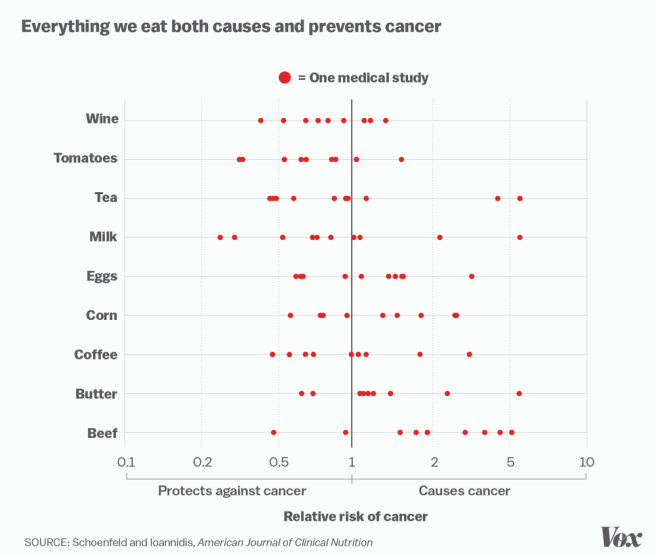
This goes double for journalists telling you how to stay healthy. I’m a journalist myself, and am fully aware of the irony of me warning you to beware strange hacks on the internet, but check your sources. There’s a lot of good stuff out there, but a large chunk of health pieces in papers are written entirely for the sensationalism and to flog copies. The research most hacks put in is minimal at best, and the studies they base their pieces are about as useful as a paper mache wetsuit.

Medical_studies-05.0
A chart which helpfully points out just how shit some studies are.

The main thing though is to not despair. Everything is always in motion, and as anxiety rises, so too can it fall. There have been times where I felt like I really was doomed to feel on the edge of death for the rest of my life. These days, I’m feeling good, and making steady progress. It’s all just small yet steady steps in the right direction.

Starting with saying no to parmos.

#NoToParmos


Thanks for reading. If you enjoyed this piece, please support this blog by liking and sharing.