Panic sets in, and my body responds accordingly.
My skin sears red hot, my vision tunnels, and my heart does its best supernova impression to the horrified audience of one.
Alarm bells ring, and my head splits as cortisol-soaked blood gushes in. All safety gauges are red.
Some ingrained part of me says I can outrun the fear. No use; my legs disagree. I have no idea where to go anyway – where do I run when I’m about to die?
I manage to flip myself mid-air onto the sofa; an intimate meeting with the radiator averted. Upon impact, my brain superheats as a million thoughts of doom descend upon it.
Emergency shut down follows.
Breathe.
Oxygen floods into my lungs. Niagara Falls descending on the Great Fire of London.
Breathe deeply.
I draw in a long, hard, deep breath of air. Time stands still. The exhale is a nuclear fire.
Again.
All processes suspended; all services cancelled. For some time, I am nothing more than a glorified iron lung, keeping this empty husk in the land of the living.
Breath by breath, I exhale the glut of terror that had filled my lungs.
A neuron fires, and I begin to reawaken. I feel the sweat cooling on my skin, my arms. I sense how wet my clothes are. My vision calms and the walls return to their original position.
As madness swirls above, I feel only one thing: serenity.
In the calm, I came to the realisation that I didn’t have an aneurysm after all. The ability to rationalise was beginning to resurface, and I settled on the more accurate self-diagnosis of a panic attack.
Out of the ether came two questions.
The first, what just happened?
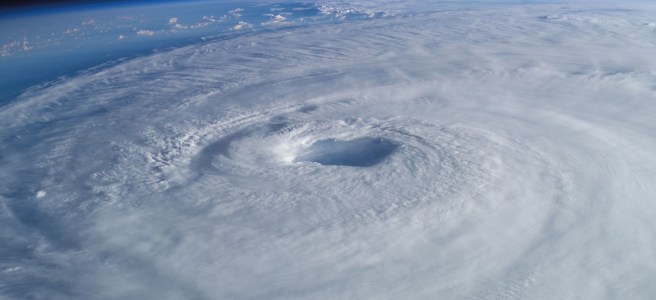
This was the eye of the storm.
I’d been redlining for some time, unintentionally brewing the hurricane of anxiety which would lay waste to my life. The candle wasn’t just burning at both ends; it’d been doused in gasoline and thrown in a volcano.
In the past week, I’d come back from a work trip to the US. The trip itself was great. What got me was the jetlag.
I started in Indiana, and crossed back a time zone to Chicago, driving three and a half hours through heavy Windy City traffic with a lack of sleep and a bad hangover. Chicago airport for six hours then hopping forward six hours – nine of which were in the air – I landed at Heathrow at around 9 in the morning. It’d be another six hours before I finally got home to Cardiff.
Hypnogogic hallucinations seeped in on that first sleep back in the UK, and panic set in that I was finally on the open road to schizophrenia. Each time I went to nod off, another round of audio hallucinations would appear, invoking something guttural and primal within me – the twilight zone terror between sleep and wakefulness.
I woke a nervous wreck.
I should have taken a break.
Instead, my 30th birthday and a week packed with hedonistic joy loomed, so I crammed. Four days, fifteen hours a day, back to back.
The above unravelling, the starting gun for a nervous breakdown, came the moment I filed my report.
Working for a startup may look like an easy gig to some, but the entrepreneurial life is no cakewalk. Limited resources, a small yet close knit team who rely heavily on you, and the ever-present threat of the company folding and it all being for nothing weigh heavily. Subsequently, you push yourself, and I’d been doing that for three years.
I’d bitten off more than I could chew, and was salivating for seconds. I’d become a professional plate spinner – burning myself out running back and forth constantly. Rather than reducing my burden, I just kept adding plates. I felt like I was perpetually falling towards burnout and failure, and the only thing that would stop me from hitting the ground was just powering forward.
I’m an expert at winging it. I learn on the fly, and adapt to the times. Sometimes, I move so fast that I miss things – important things – but I’m so good at winging it that I normally stumble into success anyway. What I’m not is someone who’s ever been hand-picked for success. I wasn’t groomed to lead. Subsequently, when I found myself in that position anyway, I didn’t realise that I’d set myself up to fail. The skillset was incomplete, and what was missing was the most important part of all. As I took on more responsibility, I neglected my own wellbeing.
A fish in a river which encounters a rock has two options. You can flow with the river around it, or you can charge straight for the rock and cave your head in.
I went with the latter. I’d subscribed to the philosophy of pressure creating diamonds. I thought I could endure it. I thought wrong.
I’d get up in the morning, and instantly feel the pressure. Working from home most days, I hardly ever saw anyone. Instead, I’d procrastinate, immobilised by my ever-growing to-do list, which seemed evermore insurmountable as each precious second ticked away. Eventually, panic would drive me to work. The sub-standard result was fuelled not by desire and ambition, but fear and adrenaline.
Subsequently, when the day was done, I wasn’t. I couldn’t unwind. There was always something left to do; a whip of failure to lash myself with. Any attempts to relax or brighten myself up were overcast with dark thoughts and over-analysis orbiting around a stone of fear lodged deep in my head.
Even when I’d spend some time with my girlfriend, or went out to see people, or go out for a bike ride, I wouldn’t really be there. I’d still in work mode, checking my phone for press releases and reports, writing and receiving emails. What I was actually doing was panicking about what I had been unable to tackle up to the moment I got back into bed where I could slip into a duvet-coated coma of dread.
Rinse.
Repeat.
Remember my wax-filled volcano from earlier? The more stress I threw in, the more it would bubble over into a river of waxy shit that oozed out of it, carving out deep grooves in my mind. Worse, these grooves don’t flow anywhere – they just go around in a circle and back into the volcano.
This is how anxiety develops.
The more you pump into that volcano and spend time swimming in the river of shit, the deeper that river bed becomes. It gradually but surely changes the way you think and react into destructive, terror-ridden mental loops.
Consequently, when other things come along, your brain deals with it the same way: you panic. When anxiety found something else to focus on – my health – all hell broke loose.
It started innocently enough. Sleep apnoea – snoring where you can cut off your breathing during your sleep. Untreated, it can lead to poor sleep, and in turn stress, heart disease, strokes, diabetes, and death.
There’s various ways to deal with it, the main one being to lose weight, but I struggled to change my habits Stressed already and driven to cover up for it with a number of destructive behaviours, including drink, drugs, and fast food, I couldn’t commit to it.
Failure came waltzing through the door. And there, hand-in-hand, cheek-to-cheek, was its dance partner: anxiety.
Then came tinnitus.
Anyone who’s ever been to a gig knows tinnitus – the constant ringing in your ears. But what if it never stops?
The first week was a living nightmare. It’s when you realise that the noise isn’t some old TV on standby or a CB radio but coming from inside your head that the walls of reality start to break down. I couldn’t sleep. Every time I noticed it, my mind would race with new ways it was the herald of my demise, and I noticed it all the time.
To this day, it torments me – a complete inability to enjoy a silent moment. As I write this, I can hear the wind blowing the blinds, the clicking and clacking of the keyboard, the buzz of fans, the traffic in the background. Above all these things, I hear the whine.
It relentlessly chips away at me. It keeps me on edge. It brings on attacks. It reminds me that I’m not alright, that I’m going mad, and its ever-present discordant tone mirrors the one within me, making me fear I’ll never beat anxiety.
I try to cover it up – music, TV, games, making noises to myself to break up its piercing tone, doing all I can to focus my attention on other sounds. Some days, it works. Some days, it’s too loud, and not even metal on full blast can drown it out.
Other high pitch sounds have become my kryptonite. When I see someone survive an explosion on TV and come to, their head ringing, or when I hear something electronic kicking out some high pitch while, it combines to make a brutal cacophony that heightens my tension and unearths the buried anguish of a hundred sleepless nights.
That’s when it’s at its worst. When the world has gone to sleep and silence fills the streets, I am left alone with its baneful wail – water torture for the ears.
It would be a year before doctors decided that my hearing was fine – much better than average as it turns out – and it was all due to my stress.
I’m much more at peace with it now that I realise it’s just a symptom, but a year is a long time for a creative mind fuelled by anxiety to go to work.
As far as my brain was concerned, tumours, mini-strokes, and aneurysms were definitely the cause. This was further compounded by the physical side effects of anxiety – which I spoke about in my last post – manifesting. Of course, I didn’t realise it was anxiety. I thought it was every other condition in the goddamn book building up to a climactic plethora of fuckery that would leave me – at best – a broken dying heap in a hospital.
Every thought: doomed. Every pain: terminal. Every moment: fatal.
Fear had bled out into every aspect of my life.
I was failing hard at work. I’d become increasingly wracked by social phobias. My relationship was falling to pieces. If there was something to fear, I feared it. The ability to feel love, happiness, or anything positive had been corrupted by anxiety and hollowed out.
I’d look in the mirror, and where once there was confidence, all I saw was a broken mess. My sense of self and all I draw strength was gone as my brain increasing swam circles in the river of shit, escalating an endless loop of stress and angst.
Until the volcano blew.
The landscape had changed. The fear that had been building up now lay strewn on the surface – a testament to my unintentional self-destruction.
And so, in this post-nervous breakdown world came the second question: what now?
I’ll be going into deeper analysis of some of the issues here: drinking, working, managing stress, drugs, fast food, relationships, health anxiety, social anxiety, and more in coming posts. But next week, part two where I’ll be talking about the year since, the road I’ve been on, and how I’ve come to understand that all of this was merely the tip of the iceberg. I promise it gets more positive.
Oh, and if you enjoyed this or took something from it, please do the like/share thing so others can too. Thanks!
![plane]](https://uprootinganxiety.com/wp-content/uploads/2016/05/plane.jpg?w=656)
 Uprooting Anxiety