Tackling anxiety: Cognitive Behavioural Therapy

Punctuating the conclusion of my Cognitive Behavioural Therapy (CBT), I got a letter in the mail this morning telling me I wasn’t mad anymore.

Dealing with anxiety has claimed two years of my life. It destroyed a loving relationship and derailed my career. It left me feeling emotionally crippled, robbed me of my confidence, and devastated my sense of self.

The CBT alone was a marathon endeavour. Twelve months on the waiting list, and a further twelve weeks of intensive contemplation about who I am, how I act, and how I approach life in general.

My CBT experience was a unique one in that I had two therapists. This wasn’t by design. It’s not as if all 6’6 of me walked through the door and they were said “this guy’s pretty big, we’re going to need another therapist”. My first therapist, Helen, went on maternity leave half way through my course, and while I appreciated the rapport we had built, I could see how it would be disruptive to the session had she given birth in the middle of it.

Given the twelve months of waiting, I had plenty of time to research CBT and do some preliminary self-CBT. Going into it, I knew that it was key to approach it with an open mind and that using a little divergent thinking – a.k.a. thinking outside the box – was going to be in order.

Helen taught me how anxiety (and through association, depression) works in your mind. Much of this I’ve touched on before – the circular thinking, the feedback loops, the mental reinforcement of negativity. But what I’d failed to realise is that hacking at these circles wasn’t enough – you needed to prove to yourself that the new thoughts you were trying to install were the correct ones. You need to walk the walk, not just talk the talk.

We also worked on uncovering the underlying drivers of my anxiety. Yeah, I could point to my work and a number of other factors of why it became overwhelming. But those negative thought loops didn’t appear from anywhere – they were deep inside me and had been there for most of my life. All that’s happened in the past two years is that they became overloaded.

With Helen, I had a cognitive shift. I saw that the defeatist, self-hating, worthlessness which has dominated me for two decades was all bullshit; hardened bullshit protected by a ton of biases, fallacies, and falsehoods, all of which I’d largely invented myself.

I only had a couple of sessions with Charles, my second therapist, who’s essentially psychology’s answer to Mark from Peep Show. Our time together may have been brief, but Charles shattered worthlessness. It wasn’t just me seeing myself as worthless that he challenged, but the very concept of worth itself.

He asked me to describe what someone of worth is. I managed to force out some descriptors: powerful, determined, motivated, etc. Once I’d finished my list, he told me that I’d just described Joseph Stalin. What he showed me is that worth, much like beauty, is a subjective concept that’s ultimately meaningless (as is the notion of having meaning). It is something that I’ve judged myself with for years, but how can you judge yourself with a metric as intangible as worth?

The letter isn’t the end of my struggle against anxiety. But it is a milestone; proof that I’ve been travelling in the right direction.

In tracking your mental health during CBT, they have two questionnaires you complete each time you go in. One, the PHQ9, tracks depression. The other, GAD, tracks anxiety (or general anxiety disorder). Here’s what the letter says about my progress:

Initial PHQ9 score: 21. Completion PHQ9 Score: 1.

Initial GAD Score: 17. Completion GAD Score: 6.

When I first completed the PHQ9, I was surprised to hear I was depressed. I had become so caught up in thinking about anxiety that I’d barely noticed it creep in. Upon reflection, I noticed the apathy, lethargy, and all the leftfield dark suicidal thoughts that seemingly struck from nowhere.

As for the GAD score, I’ve been somewhat preoccupied of late. A project I’ve been working on all summer overran, largely due to my anxiety paralysing me. I’m completely out of money and have no idea when I’m next getting paid. At the end of this week, I’ll have nowhere to live and will likely be headed for an extended stay on my mum’s sofa. I’m a 31-year-old man who’s worked his arse off the past five years to make something of himself, and all I have to show for it is a blog about how the whole affair has pushed me to the brink of insanity.

The fact that my score is so low is a massive testament to CBT. I’ve pretty much worked every day for the past month, hence the lack of posts. But instead of succumbing to panic during that time, I’ve kept my head. The fact that I managed to start writing at all is down to the CBT. The end result is that I saw the near-finished report back over the weekend, and it is the finest work of my career.

Returning to my mum’s sofa – a potent metaphor for hitting rock bottom from my graduating during the recession days – should be a source of major humiliation and the manifestation of all my failures, both professionally and personally. I should be freaking out. I should be mad at the world. I should want to turn the gun on myself, and let the rapids of my self-destructive spiral take over as I sink into a pit of shame, self-hatred, and despair.

But I don’t care. If anything, I’m looking forward to the chance to spend more time with my family. I’m actually positive about the concept. I’m a broke joke, got no idea what I’m going to do for work and a roof over my head, my immediate future is about as clear as a lead brick to the face, and I’m loving it.

Yeah, there’s been some mild anxiety, as the score reflects. What it doesn’t tell you is that each time it rose up to claim me, I was able to effectively neutralise it and put it back down. The thought processes in which my anxiety lies are still there, but their power has been severely diminished. The false logic I used to fuel them has been exposed for what it is. Meanwhile, new thought processes, new concepts about myself, are taking their place and grow stronger by the day.

After my first session with Charles, I took a month out from my CBT. When I returned, I told him about everything that was happening: the hardcore month of writing, the endless wait for my next payday, moving back in with my mum, and all the rest.

“But is it bothering you all that much?” he asked.

“Nope,” I replied, and signed off on CBT with three sessions to spare.

CBT isn’t the be all and end all of treating anxiety. It’s been incredibly useful for me, but so have many other techniques, which I’ll be sharing in future posts.

As always, please feel free to like, share, and comment. Not only does this show people enjoy my writing (and thanks for reading!) but it also helps extend the reach of my work to people who may take something from it.

Resources:

If you are interested in doing CBT yourself, here’s some resources to get you started. If you are in the UK, you can get CBT free through the NHS as I did. Best approach there is to go to your GP and ask for referral to CBT. I had to refer myself, but this might be different in your area.

CBT wiki: https://en.wikipedia.org/wiki/Cognitive_behavioral_therapy

CBT self-help: http://www.getselfhelp.co.uk/step1.htm

CBT worksheets: http://psychology.tools/cbt.html

Finding a CBT therapist: http://www.mind.org.uk/information-support/drugs-and-treatments/cognitive-behavioural-therapy-cbt/finding-a-therapist/

Strategies for anxiety – physical

Anxiety requires a multi-pronged approach to loosen its grip. It is both physical and mental, and tackling both are equally important. This post focuses on the physical, and will discuss a few coping strategies. I’m also posting another one alongside it, which focuses on the mental. I’ll be fleshing out the coping strategies over coming posts.


Anxiety comes at you from all directions.

There’s the rampant speculation over rational fears; explosive terror over the irrational. The physical effects of an ocean of cortisol pumping around your veins. Anxiety’s there waiting for you when you get into bed at night, and wakes you up with a full English clusterfuck. It’ll jump you when you are out shopping, ambush you mid-conversation, and get in your face when you are just trying to relax.

For a mental health condition, anxiety is overwhelmingly physical. Cortisol – the drug your body produces to deal with stressful situations – is gushing around your body 24/7. This is great for dodging out the way of cars or last minute second wind efforts at work, but too much of it, and the side effects run you ragged. Here’s a brief list of physical symptoms of living with anxiety:

  • Headaches
  • Jaw clenching
  • Tight neck and shoulders
  • Stiff muscles
  • Inability to concentrate
  • Racing heart
  • Shallow breath
  • Heart palpitations
  • Tremors
  • Hair loss
  • Weight gain/loss
  • Itching and sore patches
  • Tinnitus
  • Loss of appetite
  • Spots and lumps
  • Vision distortion (seeing things out of the corner of your eye etc)
  • Sexual dysfunction
  • Hilarious bowels
  • Insomnia
  • Sore throats
  • Random infections lasting ages

In short, anything that isn’t actually killing you is probably linked to your anxiety. What’s going on here is that your body is in fight or flight mode around the clock. Consequently, you are burning the candle at both ends. You spend all your energy fuelling this heightened state of alertness, and your body is running on combat drugs alone.

Reducing your body’s production of cortisol is a catch 22 situation. You are producing cortisol because you are anxious, and you are anxious because there’s a ton of cortisol coursing through your blood. To lessen the physical, you must also work on the mental in tandem, but that’s not to say there’s nothing you can do with your body to help facilitate things.

Right at the top of the list is regular exercise. I cycle everywhere, and have been steadily increasing the number of days a week I’ve been hitting the gym since I started writing this blog. The results have been threefold.

First, I’ve managed to lose a fair chunk of weight – a whole 10k in six months. Hypochondria has played a massive role in my overall anxiety. Through drink, poor diet, drugs, and way too much sitting on my arse, I hit 30 with all the enthusiasm of a 60-year-old. The wheels were seemingly coming off, and when anxiety adds a dash of catastrophising to the mix, suddenly all you can think about is your impending demise.

Exercise helps solve this problem. If you are concerned to the point of despair over the state of your body and how resilient it is to illness, exercise is an obvious solution. You aren’t going to walk out of the gym looking like The Rock after a single session, but over time, you’ll move around with greater ease, slip into old clothes better, and spend more time looking at yourself in the mirror talking about how you are a total boss.

That boss feeling is the second boon of exercise: it makes you feel good about yourself. I do High Intensity Interval Training (HIIT) as part of my regular work out. You hit it as hard as you can for a few seconds per minute, and spend the rest of it at a moderate effort, every 60 seconds. People vary on it, but I like to go for the bike or the cross trainer, at 15 seconds flat out, 45 seconds moderate.

I started being able to this three times before collapsing in a sweaty dead heap. Now I can do it for fifteen minutes. Starting out is never easy, but the more you push yourself, the more rewarding it becomes. Each time I push myself a little further, I step out the gym in a blissful wash of endorphins, feeling like my problems aren’t impossible to conquer after all.

That’s the third part of it. Exercise is easy to do, and the results are easy to track. You are proving to yourself, with the most physical evidence you have available to you – your own body – that your efforts to tame anxiety are paying off. It doesn’t have to be the gym either – just whatever form of exercise you enjoy that you can do on a regular basis.

Alongside what you are doing with your body, it’s also crucial to think about what you are putting into it. My diet has been awful, and remains pretty bad – something that still requires some work. The old adage of you are what you eat remains true in the world of anxiety, and when you eat shit, you feel shit.

What you are aiming for is consistent energy that doesn’t crap out on you half way through the day. Missing breakfast means you will crash before lunch, and crashes bring cortisol. Same with sugar – those highs come with guaranteed lows.

With sugar, you are essentially messing with a drug. It’s addictive, it can easily become a crutch, and enough of it gets you high. Same with caffeine. You chug a couple of strong cappuccinos, you will be a jittery, semi-focused wreck for a few hours before crashing into a pit of neurotic apathy.

This is the problem with drugs, legal and illegal, prescribed or otherwise, in tackling anxiety. They can be distracting, even fun, and help alleviate anxiety in the short term. However, the long term effects can actually be detrimental to your efforts, and may even be one of the root causes.

My relationship with alcohol is a perfect example. Up until last week, I managed four months off the sauce. I had been aiming for a whole twelve, but ultimately caved at the Boomtown Fair festival – which is also the reason I’m running behind on the blog at the moment. But at Boomtown, drinking gallons of cider is part of the overall package of fun. It’s a special occasion I can let myself go and actually enjoy drinking. Besides, my liver’s had a lovely four-month long holiday – it was time to put it back to work.

The same cannot be said of my drinking before. I drank for fun then. But I’d drink for any reason. I’d drink alone. I’d drink out of boredom. I’d drink out of despair. I’d drink to stuff the demons back in their box. The result? Being overweight, feeling like shit all the time, and regular two day hangovers.

Sure, it helps in the short term. But alcohol puts your body on a rollercoaster of highs and lows, and it is in that oscillation of emotion that anxiety makes itself manifest.

The key is to ration the passion. I can say, without a shadow of a doubt, that Boomtown was by far my most enjoyable drinking experience in a long time, and my body didn’t hate me for it. Now, save for another festival dropping in my lap, I’ve got another eight months ahead of me free of booze while I focus on getting in shape. Once that’s done, I’ll be drinking only when I feel the time is right, and not just for the sake of it.

Of course, alcohol isn’t the only drug we throw at ourselves to cope with anxiety. I’ll discuss some of the illegals in their own posts, but it’s worth noting that cannabis is a drug of choice for many in tackling anxiety, myself included. There’s many things to love about weed. The way it tastes. The more or less instantaneous relaxing impact it has. The way everything becomes suddenly hilarious. But my favourite thing has to be that I can get really worked up over something, smoke a spliff, and suddenly there’s a voice in my head that goes “yeah, well, don’t worry about it”, and then I don’t.

Yet, there’s downsides. Start using it often, and it’ll become a habit. Once a habit, you are relying on a drug to take away your problems. Use it daily, and you won’t get much done. If you aren’t getting anything done apart from smoking weed, your problems will mount up, and they don’t become any less of a problem just because you can’t be arsed to do anything about them.

It’s a similar story for anti-depression and anti-anxiety prescriptions. Valium helps on a day to day basis, yet is increasingly less supplied due to its addictive qualities. Citalopram and other SSRIs effectively build a mental wall between you and your problems, which can help those completely crippled by anxiety get on with their life, but doesn’t provide any quality resolution. Propranolol and other beta-blockers can reduce the physical effects of anxiety, but it’s a drug for angina that comes with a ton of side effects that can actually exacerbate your overall condition.

Simply put, prescription meds are about suppressing the condition, not resolving it. I must note I am coming from a position of bias – all prescribed meds I have taken made my problems ten times worse. But everyone is different. People have different reactions. What hasn’t worked for me may well work for others. Don’t be afraid to try out medications, especially if you are feeling like you are trapped – they may well crack the door open just enough for you to get out the room and get moving.

In looking at coping strategies, you may have also heard about breathing exercises. Before my anxiety peaked, I’d been dabbling with meditation. The whole subject is far too nuanced to sum up in a paragraph, but it’s relatively safe to say that much of it relies on utilising the power of breathing. I was incredibly thankful that I spent some time looking into it when my first panic attack hit. My gut instinct was to crash onto the nearest sofa, and focus all effort into slow, deep breaths which helped me quickly restore some sense of order.

In dealing with anxiety, there’s little that’s more useful in your mental health kitbag than tactics to help you quickly regain control, and breathing exercises are possibly the most impactful. You can use them anywhere. You can use them before an attack to cut it off at the pass, or during an attack to pull yourself back in. You don’t need special training or equipment. It’s as simple as focusing your attention on your breaths, and taking one deep, slow, oxygen rich lungful at a time.

This breathing is central to mindfulness meditation, part of what I consider to be a holy trinity of mindfulness, tai chi, and yoga. While all a little different, the end goal of each is fairly similar: instilling a sense of peace in your daily life. I’m yet to really get the hang of yoga, but find tai chi quite handy, although meditation works best for me. You might try all three and decide none of them are for you, but the key objective here is to find some peace that spills out over into your daily life.

I mentioned The Rock earlier as, although you wouldn’t expect a wrestler to be a fountain of profound knowledge, The Rock knows the score. I saw him once talking about his early morning workouts, and described his gym as his anchor. That one thing he does a day for him. That one thing a day where he can turn off the outside world. A feel good moment of peace you carve out in the day and you can truly relax.

You are unlikely to find it in booze, drugs, and cake. But you can find this in the gym, or in sport. You can find it in yoga. You can find it in fishing, in reading, in doing something creative. It could be comics, it could be practicing magic tricks, it could be carpentry. Whatever it is that you find relaxing, that you can lose yourself in, that you can find passion in. For me, it’s getting on my bike, and in music, in my writing, and in meditation.

In short, something that your body finds relaxing. Something your body doesn’t need cortisol to deal with. Something you love, that makes you feel positive, and that allows you to carry that feeling of love and contentment with you the rest of the day. Reducing the physical stress really is as simple as just being good to yourself, and giving yourself time to enjoy the world around you.

The Rock says find your anchor. So go find it, and lay the smackdown on anxiety.


Strategies for anxiety – mental

Anxiety requires a multi-pronged approach to loosen its grip. It is both physical and mental, and tackling both are equally important. This post focuses on the mental, and will discuss a few coping strategies. I’m also posting another one alongside it, which focuses on the physical. I’ll be fleshing out the coping strategies over coming posts.


Back around 500 BC, Sun Tzu, a Chinese general, wrote The Art of War. The book spans 13 chapters, each focusing on the psychological approaches one should utilise at different parts of a battle: planning, overall strategy, tactics in the battle itself, and so forth. However, Sun Tzu’s strategies can not only be applied actual military battles, but conflict of any kind. Hence why, two and a half millennia later, the book still remains wildly popular with a diverse range of society, ranging from modern militaries to Rage Against the Machine to the coke-addled sociopathic suited human cancers occupying the world’s banking system.

Of Sun Tzu’s various wisdoms, perhaps the most famous is “know your enemy”, or expanded:

“If you know the enemy and know yourself, you need not fear the result of a hundred battles. If you know yourself but not the enemy, for every victory gained you will also suffer a defeat. If you know neither the enemy nor yourself, you will succumb in every battle.”

Typically, I don’t like to describe anxiety as the enemy, or say that I’m battling it, for reasons I’ll make apparent. Yet, for the purpose of this post, let’s treat it as such. So, if we were to approach the problem like Sun Tzu, the most important thing we can do – before anything else – is understand anxiety.

Anxiety is both physical and mental. So to treat it, you have to approach both the physical and the mental aspects at the same time. Without doing anything to reduce the physical stress, your mind will have too much to focus on to apply any real effort to mental unwinding – you’ll just be caught spending your time running between spinning plates. But conversely, if you just ignore the mess in your mind, nothing gets resolved.

As I spoke about in the accompanying post, the body creates cortisol when stressed to help you cope – it can give you increased focus, help you push yourself further, increase your reflexes, all of which can be pretty handy when it comes to jumping out of the way of a car or something similar. With anxiety, because you are stressed all the time, the tap is left on.

The physical symptoms are the result of your body getting burned out from being alert at all times. In turn, you feel burned out, which only feeds your anxiety. As you’ll see, anxiety loves a good circle.

The cortisol itself is produced as part of your body’s fight or flight reaction. Or, more accurately, your fight, flight, or freeze reaction. Many people don’t realise there’s this third option, although a massive chunk of us still do it. When people get taken out of their comfort zone in an emergency, many will freeze. Apparently, playing dead served us well during our evolution.

This whole process is controlled by a part of the brain called the amygdala. This part of the brain is hardwired to the rest of your body – it can react faster than you can think. Whenever you see something coming out of the corner of your eye and duck before you even realise that some mad bastard bird is hurtling towards your face, that’s your amygdala. It identifies threats without consulting you, and takes action before you get a say in the matter. Without it, you’d probably already be dead.

Consequently, the amygdala is a jittery bugger at the best of times. It also has its own memory banks, separate from your own conscious self. Phobias are a good example of this. Rationally, I could absolutely devastate a wasp. It might have a stinger, but I’m a man. A 6’6 man with a variety of swatting tools at arm’s reach. My feet should be tried for war crimes against snails*. I have hands with a surface area that your average fly would find unfathomably terrifying in both scale and raw destructive power. I am the insect world’s Cthulhu.

Yet, all it takes is one wasp to come within a three-metre radius of me, and I completely lose my shit. This is down to my amygdala training itself to fear wasps, and will trigger when any wasp – or any flying insect if it is having a bad day – decides to say hi.

This is why you can panic over seemingly nothing. Think of it like going out with a sober friend while you get trashed. You do all sorts of crazy shit, like stripping off and running through Burger King while telling all the punters to flip your meat. You, of course, conveniently forget all this. Yet, the next day, you walk past Burger King with your friend. Your friend looks concerned, but rather than reminding you of the night before, they just start smacking you with a stick. A big, electrified stick coated in adrenaline. This is your amygdala in action.

Of course, anxiety also exists in the conscious mind, and often works in tandem with the amygdala, in a conversation that I think goes something like this:

“Hey, Amygdala. I’m not liking the situation we’re in. What do you think we should do?”

“I THINK WE SHOULD FREAK THE FUCK OUT!!!”

“Done. I’ll get the oxygen tank, you get the cortisol.”

When combined, the panic can be extremely powerful. You are scared in your conscious mind, and your amygdala is screaming fight, flight, or freeze. Yet, the situation can be as simple as being at work, and punching your boss before legging it out of the office isn’t an option. The fear in your mind battles the rational, and the product is more stress, more cortisol, and more searing holes in your brain where logical reasoning should exist.

The main difference the two processing centres is that in the conscious mind, you are dealing with concepts you can put your finger on. Speaking in front of crowd. Saying the wrong thing in a social setting. Feeling like you are about to drop dead.

All these thoughts work on the same circular principle: a circle of fear. You have triggers – a memory, a sensation, a situation. Your brain jumps to some pre-assumed conclusion. You react in a certain way.

Examples:

I can’t deal with everything. I’m worthless. I’m going to drink.

I can’t think of what to say. No one wants me here. I’m never going to go out.

I’ve been worrying about this lump. I’m obviously about to die. Better have a panic attack.

There can be rational thoughts and fears mixed up here, but you aren’t processing them rationally. Instead, you are just pushing them through the circle of fear. You are allowing past experiences and memories to cloud your ability to find the real truth of the present. Rather than alter your thinking, you are instead re-treading old ground, stomping your way through familiar pathways of fear burned into your brain.

At your core, you are simply reacting to what you see as a truth about yourself. As I spoke about before, deep down, I have a feeling that I’m entirely worthless to anyone, and have allowed my thoughts, feelings, actions, and reactions to be controlled by this concept of myself for the past thirty years.

I’ve sought evidence to support that claim, did little to challenge or overcome it, and dismissed anything to the contrary.

I’m now in the process of overturning all of that. I now know my enemy. It amounts to little more than a simple ingrained thought, and various vicious circles of mental trickery I’ve built to enforce it, with a little help from a meth-addicted crackhead part of my brain that freaks out over things with wings.

Understanding all of this has been a major coping strategy for me. Doing the research into anxiety helps normalise it, rationalise it, and takes away its power. Hit the books, download the podcasts, talk to others about their experience with it. Once you’ve done that, you can begin to apply it.

Talking in of itself is critical. One of the reasons I have this blog is so I can order my thoughts on anxiety, and put a narrative to my experience of it. I can look back over four months of work, and see the progress I’ve made. But it also allows me to be open about it. It shows me that I’m not alone in this.

It works both ways. I’ve had many people get in touch and say this blog has helped them better understand their own anxiety, which is fantastic. But it’s also shown me how other people comprehend it, and that dialogue has shown me ways of thinking about anxiety and life in general that I’d previously not even thought of.

An example of this came the other day while I was doing Cognitive Behavioural Therapy (CBT). I’m currently at week 8 of a 12-week course on it, and have had to change therapists as my first one is off on maternity leave.

I was discussing worthlessness with the new guy, who got me to describe what attributes a worthwhile human being would have. It’s a genuinely tricky question to answer:

“A sense of conviction, the ability to get things done, be productive, to stick to their moral code…” I blurted out.

“You realise that you just described Joseph Stalin, don’t you?”

My sense of worthlessness was shattered. How can I be worthless when what it means to have worth is, in itself, indefinable, ineffable, and entirely subjective?

CBT has delivered a number of similar realisations, and I’d highly encourage people to give it a go. The way it works is to help you identify mental knots in your cognitive thought process and how they affect your behaviours as your behaviours can circle back round into the thought process. Identify the knots, untie them, and then change your approach so you don’t tie them again. It is talking the talk, then walking the walk.

I’ve also found that CBT has a strong synergy with meditation. When you meditate, the goal is to essentially just focus on one thing. This might be your breath, it might be scanning through your body, it can be on a mantra, on a noises surrounding you. It can even be on coffee.

One mindfulness trick is all about coffee. Most of the time, we chug the stuff back while on the move, and pay no attention to it whatsoever. I want you to really taste it. So, next time you order a cappuccino or make a coffee at home, give the experience 100% of your effort. Take note of your surroundings. Listen to it brew. Watch the steam as it pours. Smell it as the impending caffeine hits your nostrils. Sip slowly, and spend time identifying exactly what you taste. You will be in awe at what happens when you pay attention.

Of course, your mind will wander while doing it. This happens all the time when you meditate. You are trying to achieve complete stillness of the mind, but this is next to impossible. Therein lies the fun.

What you are training your brain to do is to notice thoughts as they happen, to not react to them, and to be able to let them go. It’s the gym for your brain. You are building a muscle that can keep you in the present, identifying thoughts as they come in, and happily give them the finger as they drift back off into the cerebral oblivion of your subconscious.

Combine that with CBT, and what you’ve got is a deeper understanding of yourself and the sort of bullshit your idiot brain likes to throw at you, and an effective countermeasure to it. It’s the understanding, the strategy, the tactics, and the army all wrapped up. It’s about as Sun Tzu as it can get.

But here’s why it’s not a battle, and anxiety isn’t the enemy. In knowing anxiety, you come to know yourself. You see yourself from different perspectives, and gain a greater understanding of yourself. What you fear. Why you act the way you do. You are the enemy of which Tzu spoke of. Knowing the enemy is knowing yourself.

But in that knowledge of yourself, you find peace. You aren’t your own enemy. In understanding, you realise that there’s no reason to fight yourself. You are just a human being just like the rest of us, with all the faults any of us have, with a silly human brain that’s just doing its best to keep you away from fear, harm, and wasps.


*To any snails reading this, I am so, so sorry. Know that I never meant to hurt a single one of you. Slugs, on the other hand, can fuck right off.

The anxiety of procrastination

I should probably apologise for the delay between posts. It’s been hot, I’ve been busy, and I’ve been putting it off.

I put a lot of things off.

In all aspects of my life, I am constantly kicking the can down the road to be picked up by future me.

I consider procrastination to be my single biggest flaw. I’m always thinking about what I could be doing instead, what I’d like to be doing, and what I’ve failed to do.

I’ve been writing for over twenty years, and still haven’t started writing a book. I’ve wanted to make music my whole adult life, and only picked up a bass guitar for the first time a couple of years ago. I want to travel, yet rarely get further than the sofa. I want to be fit and healthy, but I eat shit instead of putting effort into my diet. I want to find my perfect woman, and yet have done literally nothing in the year I’ve been single to meet her.

It’s not just the big ambitions, either. It’s the small things. I first wanted to write this post three weeks ago, but didn’t. And it’s not like I spurted out some gibberish and have been feverishly tinkering with it. I’ve barely thought about it, other than to boot it firmly into tomorrow’s problems. Even now, by writing it, I’m procrastinating – I should be working on a project I’m overdue on, another victim of my casual attitude to life.

It’s a snowball turning into an avalanche.

I despise feeling like this. Every time I procrastinate, it’s like being grabbed from behind with two gigantic hands. The pressure of the palms around my back, the fingers tightening around my ribcage, the thumbs pressing down on my neck and digging into the back of my head.

I am being suffocated by the weight of my own inaction, contorted by stress, asphyxiated by anxiety.

When something is weighing over you, everything you do in the meantime is tainted. Every distraction is hollow, anything you engage in is meaningless. Physically, you are doing nothing. Mentally, you go into overdrive. You question your ability, your talent, all the bullshit you tell yourself about the person you are.

I begin to knock myself. I tell myself that I’m no good, that my self-professed talent is just a lie, that the worthlessness I feel in myself is the only truth I know. My inaction serves to confirm that – if I’m not an imposter bullshitting myself about being a better person, then surely I’d be on top of things?

As the list of stuff that isn’t getting done goes up, my self-belief continues to spiral. The life I lead is a reflection of the person I truly am, and through a lack of achievement, I see that my life isn’t worth shit.

By this time, I’ve beaten myself black and blue. I’m as exhausted as I would be if I’d done a whole day’s work, and I haven’t even lifted a finger. All the good intentions and self-realisations and epiphanies about who I am – they don’t add up to anything. They are just words. I’m talking the talk, but not walking the walk.

Procrastination is a major catalyst for anxiety and, frustratingly, is also a symptom of both it and depression. In failing to get a handle on it, the stress goes through the roof, and anxiety gorges itself on the cortisol. I’d argue that procrastination should be recognised as a mental health condition in its own right, but I can’t be arsed.

To compound the issue, it’s an ingrained approach to how I deal with a problem. When I was growing up, I relied heavily on my intellect to get by. I still do. If you learn from an early age that you can coast to get by, chances are you’ll repeat the behaviour often and to great effect. The result is that concepts like hard work, applying myself, and discipline are somewhat alien to me.

From my point of view, this would be absolutely fine if I could just turn it on whenever I needed to kick it up a gear. I find that doing nothing is a great way to spend your time – in fact, down time is essential to achieving some sort of balance in life. But when I’m faced with a problem that needs consistent, sustained effort, I crumble.

I’ve read a ton on how to tackle procrastination. I’ve made to-do lists. I downloaded The Rock’s alarm clock so I can get called a jabroni in the morning. I’m always making plans for how to overcome procrastination. How this time it’ll be different. How I’ll finally crack it. That I’ll get going and become that productive, useful person I’ve always wanted to be.

But whenever the moment comes, I fall. I set my alarm clock early to get those exercises in, and just use the extra time to stay in bed. I clear the day to start writing my book, and spend the day abusing assclowns on Facebook. I put together my diet, buy all the groceries, and dial in a kebab when I get hungry.

However, I can see now where I have been going wrong. Whenever I make these plans, I leave it for the ever resourceful future-Gregg to sort out. He’ll have the energy. He’ll have the tenacity. He’ll feel how I feel now, and know we can no longer feel like that.

In short, I’m expecting someone who isn’t me.

When the time comes to face a problem, it’ll always be me who gets there. I can’t expect me to be someone who rises to the occasion overnight. To become that person requires effort, it requires discipline, it requires sustained focus. It requires all the things I lack.

Worse, I’m arriving at these situations with the weight of the world on my shoulders. I’ve beaten myself into a hole. I’m piling on all the pressure I can – I have to do it this time, I will be that different person.

Problem with talking to myself about it is that it’s just talk. It’s not walking the walk.

I realised this was a problem well before anxiety came along and took my life for a joyride, but it’s through understanding anxiety that I’ve begun to realise just how powerful an effect procrastination has on my life. Given the choice, I always take the easy route. I’m not challenging myself. I’m not being true to myself.

When I pull back the layers, I see that same familiar beast of worthlessness staring back at me. It’s telling me that I won’t succeed, so what’s the point? It’s telling me that I’ll fail, so just avoid the problem until it goes away. In listening to it, I confirm the worthlessness. In believing that I can’t, I’m ironically setting myself up to fail.

If you don’t try, you’ve already failed.

A few months back, along with giving anxiety the finger, I decided to say fuck you to procrastination.

The approach has been similar to anxiety – you cannot expect to be a different person instantaneously. Instead, you have to challenge your behaviour frequently, consistently, and patiently. You have to build up a body of evidence that says you are a person who can get a handle on things. You have to walk the walk.

In this, I came up with a simple yet effective approach. Each time I’m in the situation where I can either drift or jump on something, I tell myself “just act”.

Whenever I’m dithering on whether to go to the gym or not, just act. When I’m sat in front of a blank page watching the cursor blink back at me, just act. When I’m lying in bed unable to grasp a handle on things, just act.

I’m taking the time I’ve been spending sitting around criticising myself, and kicking that into the future instead of the experience directly in front of me. I see the self-doubt, the self-criticism, the apathy all lining up to take shots, so I get moving before they get the chance.

Sometimes it works, sometimes it doesn’t. The point here isn’t to beat myself up when I fail, but to celebrate when I succeed. I’m retraining myself, and that takes time. It takes patience. It takes a willingness to experiment, and to allow myself the opportunity to fail. It takes being challenged by every fucking thing that comes along looking to steal myself away from what I want to achieve, and saying “get fucked, I’m doing shit here”.

Leonardo Da Vinci – one of the greatest polymaths to have ever walked the face of the planet – once said “I have wasted my hours”. Not years, not days, but hours. At the time, I thought this incredible – how can a man who’s achieved so much believe he has wasted his hours? And should I be thinking in those terms?

I thought it was inspirational – a way to live my life by. Now I realise my folly. I’m judging myself on those terms. I’m spending my hours criticising myself and standing in my own way. What I should do is just act, and let the chips land where they may.

I don’t know if I’ll ever write that book, but I certainly won’t if I don’t put pen to paper. The probability is that I won’t be making the Olympics this year, but it’s certainly not going to happen when the only weight I’m carrying is my inaction. There’s a good chance I’ll never meet the woman of my dreams, but I’m damned sure it won’t happen while I’m curled up in a ball of self-doubt avoiding the world.

And it’s making the difference. This blog – despite its brief hiatus – is the most writing I’ve done for myself in years. I’ve got a copy of Ableton, and working on my first real attempts at making music. I’m hitting the gym three times a week, and feel stronger than ever. I tore into that project this week like a goddamn hurricane, and I’m just getting warmed up.

It’s a matter of perspective. It’s a matter of focus. It’s a matter of knowing what you want, and knowing that not working towards it will leave you feeling hollow, empty, and stressed.

Be brave. Take chances. Just act.

Sure, there’s other stuff I want to do, things I need to achieve, a life I want to lead just waiting for me to get my hands on it. But I shouldn’t expect or want it all to be done right now. After all, you’ve got to have something to do, right?


Thanks for reading. As always, likes help me see my work is appreciated, will do my best to respond to any comments, and encourage shares in case my battle with anxiety can help others.

I’ll get onto those coping strategies next week. Or maybe the week after 😉

Anxiety and depression: two sides of the same coin

The Catholic faith has this thing called Purgatory. Not quite Heaven, not quite Hell, it is a whole lot of nothing where souls sit for all eternity until judged worthy enough to enter Heaven.

For me, there’s no better analogy for what depression is like.

It is the Endless Void.

The Bottomless Pit.

The Big Empty.

For much of my life, I’ve struggled with depression. When things get tough, when I’m down on my luck, when I feel I have no one in my life and I’m all alone, there it is. Waiting for me. Ready to drown me with its dark, black tendrils and I, defenceless, let it envelop me.

At its worst, it tortures you while offering a knife to your throat, goading you to lean forward and set yourself free.

My worst bout came after finishing my final year of university. It started – as these things typically do – when I lost a girl I loved. She’d gone home to visit her parents in Sweden. By the time she was due to come back, the place we both worked had shut down – a place I adored working at and other kick to the mental scrotum.

There weren’t any other jobs – this was 2009. I graduated during a recession in full swing. As the months dragged on, the chances of getting her back or even finding any work at all seemed increasingly more remote. My heart sank, and I sank with it.

Depression can a suck a person dry. Even the strongest of us can be drained by its embrace.

Sending out a single CV in a day became a major achievement. Hell, even getting out of bed and playing Call of Duty was an arduous task.

What I had all the energy in the world for was self-loathing. I spent every day beating myself up. Every hour reminding myself that I’m a failure. Every minute wishing it was my last.

Eventually, I decided I needed help. I booked an appointment with a doctor, inventing a fungal infection as an excuse. So there I was, one fungi-free sockless foot stinking up the surgery, balling my eyes out.

She stuck me on citalopram. Aside from playing havoc with my sex drive, flipping me from ravenous beast to impotent failure at random, the drug created a wall between me and the depression. It was the strangest thing. I knew it was still there, but I couldn’t access it. Yet, it gave me the space to realise much of what I felt was due to my situation.

The solution was obvious: change the situation.

After ditching the drugs, I managed to get a job looking after autistic children and met a lovely lady. Things began to look up. It didn’t last. The job was a dead end, working for fascists more concerned in profit than a child’s health. They soon twigged that I gave a shit, and I was promptly shown the door. Freshly unemployed, the girl quickly ditched me for some flash wealthy prick laughably called Rich Forbes.

Hurt though I was, the inevitable spiral downward got put on a brief hiatus. I’d soon end up back in my hometown looking after my mental mother, then in the full swing of a bi-polar breakdown.

The novelty of the change kept me occupied, but soon wore off as tedium replaced it. Jobs were still scarce. Life at home was an unending horror. I couldn’t seem to get a break, and life moving forward looked ever more bleak. The only joy I had in my life was the odd occasion I could scrape together enough pennies to get drunk out of my skull.

The whole process robbed me of two years of my life before I started to get back on my feet. Even then, depression would haunt me.

I never looked up suicide techniques online, didn’t ever put myself in harm’s way with the hope of ending it. But I thought about it. I thought about it all the time. I understand why people do kill themselves. It seems easier than another day of the relentless dirge. When you are in that state, it is without end. The only light at the end of the tunnel is death.

It was therefore with a healthy sense of irony that I began reminiscing over those good old days when anxiety really began to take hold. Here I was, a few short years later, panicking over tumours, cancer, and any other ailment that looked vaguely pointy and dangerous. Somewhere along the line, I realised, I’d actually come to care about being alive. I wanted to be alive.

Let me tell you, when it heard about this travesty, depression was not impressed.

Despite splitting on the issue of pro-life/pro-choice, I’ve come to realise that depression and anxiety are very much two sides of the same coin.

Granted, there’s a few more differences. The lethargy of depression is not reflected by the bouts of energetic neurosis of anxiety, and depression doesn’t seem to exhibit anywhere near the number of side effects several gallons of cortisol pouring through your veins has.

Yet, there are strong links. Where anxiety seems to be a fixation on the future – what could happen – depression dwells on the past – what has happened. If anxiety is panicking over what seems like inescapable doom, depression is being trapped in your past.

It uses the exact same mental circles. The rivers of shit I spoke about before run just as strongly in depression as they do anxiety. You are trapped in the exact same loops. You will still continually fuel your own circle of despair.

I mentioned before that I’ve been doing Cognitive Behavioural Therapy – which I should add has been going extremely well – and had somewhat of a revelation in a session this week.

At the heart of both my anxiety and depression is worthlessness. They are intrinsically tied. Both feed and draw strength from the same core feeling that I’m nothing.

In depression, I scour my past for evidence to back this idea up. Once I’ve found it, I linger on it. In anxiety, I actively hunt it in the present. If I can’t find it, I just invent it.

In figuring this out, I confirmed a long held belief that they were tied together – that the anxiety had been there all along, lurking behind the bouts of depression. I’d searched for the connection, and now I’ve found it.

In discovering it, many things suddenly make sense. When I went through those suicidal months, I’d figured that much of my condition was situationally-based. I was broken hearted. I was destitute. I felt there was no hope.

It made sense to me that the condition was superficial. At the time, when I looked back at other depressive periods, I could normally find a cause – a trigger. But now, I can see how all of those events and see how they exacerbated the feeling of worthlessness.

My broken heart; evidence no one loves me. The lack of jobs; proof that I’m not of value. Returning to my hometown empty handed; confirmation of my failure.

It’s all linked. It’s one and the same. It is not the ebbs and flows of life that cause it. It is my response to it. It’s not the dark things my inner child is pointing at. It is me at the age of 31 still thinking like the sad, isolated, bullied child that lingers in my memories.

More recently, I became depressed in the run up to my redundancy last December. After it was formally announced, I sat at home in stasis for a whole two months, incapable of grasping hold of the situation. I was immobilised by my failure, and the reinforcement of my worthlessness narrative.

It was different this time, though. The finer details of how I broke depression’s spell the first time around will be the subject of a future post, but the experience imbued me with a deep sense of hope. Hope that I’m stronger than it. Hope that I can beat it. Hope that no matter how I feel right now, there will always be a happier day.

Everything is temporary.

Back when I started writing this blog, I said I had to grab the root of anxiety in order to uproot it. From where I sit now, this feels like it. This is the deepest part of it – the origin of it all. The past three months, I’ve been diligently analysing the root, understanding what it is, and what it’s made from.

Now, the real uprooting process can begin.


Over the next few posts, I’m going to discuss some of the techniques I’ve been using to combat anxiety, as well as some of the epiphanies I’ve had along the way. I’ll be talking about meditation, coping techniques, medication, exercise, CBT, challenging my biases and ideas about myself. There’s even a love letter to cycling coming up.

Oh, and I’ll finally get onto addressing a substantial elephant in the room: psychedelics.


Likes, shares, and comments not only let me know my work’s appreciated, but help it reach others who may draw some strength from it. I’ll also endeavour to reply to anyone going through the same issues I’ve faced, so please reach out. You are not alone.

The lonely battle with social anxiety

In psychology, there’s a thing called confirmation bias, and it’s something we’re all guilty of doing. The idea goes that once you believe something, you’ll seek out and accept evidence that reinforces that belief, and vehemently reject evidence that challenges it, no matter how solid.

Typically, you’d apply this to stuff like climate change, or religion, or politics. And while both you and I undoubtedly do exactly this, there’s one idea that I’ve applied it to all my life. A concept that I’ve constantly looked to reinforce. One thought that has been in my head all my life, and that I’m only just now beginning to understand is the starting gun for everything I’ve spent the past three months writing about.

It laid the groundwork. It introduced the patterns of fear now firmly resident in my head. It dug out the grooves for the river of shit to flow through.

That thought is this: I mean nothing to anyone.

For years, I’ve been convinced of this. More than convinced – I feel it all the way to my core. It is the concept upon which all my human interactions take place, it is the one constant I’ve had in my head for as long as I can remember.

After arriving back in my hometown in a bid to deal with anxiety, I was talking with a friend. She asked how I was settling in, and I said it was going okay, but I hadn’t really heard from anyone. Then she said “oh, that’s because everyone’s forgotten that you came back.”

“Of course they fucking have,” I said to myself. “Because my existence is fucking meaningless to fucking everyone.”

In the good old days, I’d have allowed this to just rattle in my head for days, weeks, or even months without any sort of check. I accepted it as normal and how I should be thinking about myself. Now, at the very least, I have a name for it: social anxiety.

The stereotypical sufferer of social anxiety is someone who shies away from social contact, who becomes deeply uncomfortable in social situations, and who can agonise over the slightest interaction for an eternity.

I originally felt this wasn’t me. I often find myself dwelling on social interactions and generally struggle and overanalyse in group settings. Yet, on the surface, I’m a sociable, outgoing person who speaks his mind. I do public speaking, generally up for making a fool of myself, and embarrassment less of a concern, more a good old friend. I don’t fear others, I’ve never been afraid to be myself, and I – for the most part – don’t duck out of social situations.

Of course you don’t have social anxiety, I told myself. It’s just that everyone just hates you.

Oh.

Wait.

Shit.

For years, I have projected the idea that I don’t give a fuck about other people and their tedious opinions of me. That I’m strong enough to do everything by myself. That I don’t need anyone in my life.

But it’s a lie. A damned lie. A damned lie I sold to everyone so I could convince the biggest sucker of all: myself.

The truth is that I perceive my life as worthless in the eyes of others. I’ve done it my whole damn life. I still believe it to be true. I believe it so completely that I don’t even get typical anxiety about it – it’s a certainty I can do nothing about. There’s no fear, no attacks – just a weary ingrained acceptance that I am universally despised.

This is where confirmation bias comes in. I struggle to recall good memories with friends, but vividly recall every time I’ve been let down. I assume that whenever people speak of me, they speak negatively, if they even think to discuss me at all. I forget compliments in an instant, but can remember insults and putdowns from decades ago.

I am convinced I am nothing. By searching tirelessly to find evidence to reinforce that narrative and rejecting anything to the contrary, I have persuaded myself that there’s nothing that can be done about it. Worst of all, I have allowed a pervasive sense of self-hatred to fester deep within me – one that fuels depression, self-loathing, and a pattern of self-destruction that’d make Hunter S. Thompson wince.

This has been a problem from the moment I was born. I was raised as a Catholic, and thus have been told from birth that there was something wrong with me. I’ve had the concept that I’m a sinner, that I’m evil, that I’m worth nothing hammered into me from my first breath.

Things didn’t improve as I aged.

Children are evil little shitbags. Barely more sentient than monkeys and far less socially sensitive, these disease incubating spreaders of hatred make Hitler look like the goddamn posterboy for inclusiveness. And much like the Nazis, children hate differences in people – they will burn at the stake anyone with even the slightest deviance from what is considered normal.

Being tall, smart, and generally capable of independent thought, I was doomed from the start. It didn’t help being raised as a Catholic either – people spurned me, and my faith told me I was at fault. For added salt, my mother delighted in embarrassing me all the way through school, providing my school chums with bucket loads of ammunition.

Despite that, I did represent a challenge. You couldn’t easily beat me up, and you couldn’t outsmart me. So instead, people just insulted and isolated me.

I’ve always hated football, but through fear of yet further social exclusion, I was forced to play at school. Being tall and surprisingly flexible for someone of my height, I became quite good at the ol’ goalkeeper game. I’ll admit – I even enjoyed it. None of this mattered though – no matter how hard I tried, I was still shit in the eyes of my peers.

There was this one game where we won 5-0. While I can’t speak for the five goals scored by my team, I was instrumental in ensuring we didn’t concede a single one.

At the end of the game, our PE teacher gathered everyone round. In a bid to boost my confidence, he asked everyone who they thought was the better goalie, a well-liked chap called Ben who let five goals in, or myself with my flawless performance.

Everyone said Ben.

This was essentially the story of my formative years. All the way through school, I felt alone and like an outsider, and seemingly every opportunity to remind me of this was expertly seized upon. Family, friends, faith – there was little in life growing up that didn’t rape me of my self-esteem.

The deepest wounds came when friends at my middle school pitched in. Amongst other fun and games, they’d purposely go out of their way to invite me places just to run away. Sometimes I’d give chase, sometimes I’d just break down and cry. It wasn’t until late in my school life that I began to make friends that didn’t seem hell bent on trying to fuck me over.

This has stayed with me. Twenty years later, I still expect people to abandon me. If people are late to meet me, I’ll assume they aren’t coming. If someone doesn’t text me back, I take it like a goddamn dagger to the heart. Even something as simple as someone needing to pop to the shop quickly while we’re in the pub, I’ll think they are using it as an excuse to leg it.

I expect people to fuck me over. I expect no one to be there when I need them. I expect nothing from people because that’s what I expect them to think of me.

Social anxiety, without me even realising, has shaped so much of my personality.

I consider myself a non-conformist. I dismiss commonly held beliefs simply because most people believe them. I avoid groups and clubs because I feel that I’m not wanted anywhere. I feel no solace in being a part of something. I don’t subscribe to groupthink, or feel the pull of group mentality. I feel alone in a crowd. Hell, I feel alone no matter where I am.

More than that, I feel I should be alone. That it is my destiny. That I should just accept it and stop interfering with everyone else’s life.

Of course, the fun doesn’t just stop at friends and acquaintances. Unsurprisingly, thinking everyone hates you has made relationships somewhat tricky.

Shortly after one relationship had crashed and burned, I took my Nan out for lunch. As I was bringing her up to speed, she noted that I was talking about an entirely different woman from the last time I had seen her. She offhandedly remarked that I was the sort of person who’d always be alone.

She meant to jab at my chronic womanising. What she hit instead was the anxiety. My dear old sweet Nan, mercilessly throwing me to the wolves of my deepest insecurities.

The first step – actually talking to someone you’re attracted to – is something I’m sure we’re all familiar with. It doesn’t help when your so-called confidence is a raging misanthropic pessimist that’s chucking empty bottles of whiskey at you and calling you a universally despised cunt before you’ve even made eye contact.

Worse is admitting feelings. The amount of women I’ve been absolutely crazy about but unable to own up to my feelings is staggering. My self-worth is a giant water balloon – seemingly impressive but explodes under the slightest pressure (and yes – you can steal that analogy for your premature ejaculation blog). If a woman who I’m mad about elects to spend some time with me, I’ll just assume that the universe is just having a bad day and it’s probably worth just keeping my mouth shut until the shitstorm continues.

On occasion, there’s been women who not only lead me to water, but have the patience to repeatedly slam my slack-jawed face into it until I realise what’s going on. My last girlfriend once told me I didn’t know how to be loved, and she was right. I’ve loved many women, yet when it comes to thinking that any of that was reciprocated, I believe one or two of them. Even then, I constantly wrestle with it, and ultimately lose the fight.

Someone loving me does not fit into the narrative of self-hatred I spin for myself. When you adamantly believe that everyone hates you and the world wants you to be alone, love is the second hardest concept in the world to accept.

The hardest? That I’m wrong.

That I’ve been wrong all along. That I’ve let a small handful of bad experiences shape my connections with others for 31 years. That I’ve let the Catholic bullshit win, and that my whip of self-flagellation is my self-hatred. That my self-hatred isn’t even me, but is the manifestation of all the negativity utter bastards have shown me. That I don’t have to listen to that voice anymore. That by exposing it, by understanding it, and by shoving it out in front of all of you that it will wither and die. That I don’t have to live like this, that I don’t have to think like this, that I can change how I treat myself.

That I actually have value. That people actually do care. That my mind is worth saving from the ravages of this terrible affliction after all.

This has been the hardest post so far for me to write – hence why it took an extra week to get out. The idea behind all this has been knocking around for a year, but this is the first time I’ve truly admitted this feeling to anyone and how badly it has sucked me in, including myself. I feel raw. I feel like a fool. I feel like I need to apologise to everyone I know, especially myself. I feel like I’ll need some time to really explore the whole concept, how it has affected me, and how to overcome it.

I haven’t got any real idea how people actually feel about me – does anyone? But what I do know is that I have friends. I have a life. I don’t need to be dominated by my past. I can find a new understanding of myself and my place in the world, and find positive evidence to back it up.

At the very least, I don’t have to hate myself.

—-

I started CBT a couple of weeks ago, and one of the things that came out of it is that I might not be as over depression as I’d been leading myself to believe. This latest post confirms it – I can see how both anxiety and depression have been a tag team here. So, next week, I’ll take a break from anxiety to discuss its mopey cousin.

As always, if you’ve taken anything from this blog, please like, share, and comment. Not only does it help keep me writing, but exposes my work to others suffering through the same stuff I’ve been through.

Working towards mental collapse

There’s a modern day plague affecting the western world. It is isn’t ebola, or zika, or any number of disease-shaped boogiemen.

That plague is stress.

For me, there is no greater source of stress than my relationship with work, which has been the primary catalyst for all the anxiety I have experienced.

Work anxiety has so many avenues of attack; numerous meteorites striking to the core of a person. Becoming destitute. Your social standing. The time it robs you of. The pressure to deliver. Your future success. Dissatisfaction with what you do for work. Inadequacy. The constant competitive nature. Procrastination driving deep panic. Working too hard breaking you as a person.

Up until January this year, I’d been working at a media startup covering university innovation. While niche, I can’t help but love the sector. Robotics and prosthetics. Cancer cures and anti-ageing pills. Games companies and artificial intelligence. All the ground-breaking initiatives to get innovation out into the world and the pots of cash appearing to stimulate it.

The topic was perfect for me, and the way I covered it didn’t hurt either.

I worked from home, chose my own hours, worked at my own pace, had responsibilities and a very direct impact on the direction of the company, and got paid to travel all over the world.

But what goes unspoken about in the startup world is the excruciating toll the entrepreneurial lifestyle takes on you. There’s constant uncertainty about your work and its value to the outside world. You never know how long the company is going to ride any current waves of success. You fret over whether you are even going to get paid next month.

My old boss used to get up at 3 in the morning and work through to the late evenings seven days a week – I’m not sure he has a life away from his laptop.

This is the level of dedication which is expected of you.

I’d get up early, and work late. I’d throw my whole being into my work. Whenever I was supposed to be relaxing, I’d still be working in my head. I’d check emails at all hours. I’d take on new projects, more responsibility, and more work. In startup life, each team member has to be a star player, and I’d be damned if I was going to be the weak link.

At the time, I had no idea of anxiety. I didn’t know what stress could do to a person. I’m a big, powerful man who’d stumbled through life without a plan yet always landed on my feet – I figured I was the sort of person who could just carry it.

I was dead wrong.

The pressure began to find those cracks. Increasingly, I questioned myself, my talent, and my ability to withstand it all. I began to believe that I was an imposter who’d stumbled into this and that I would be found out. Instead of blowing off steam, I’d just take the stress and throw it back at my work.

As time went by, bad habits began to emerge and became entrenched. Top of this list was procrastination, which – of course – made things worse. The to-do list grew, and the time I had to do it in withered. In response, I became a master at the last minute delivery. These days, I hear people panicking over a 1,000 word essay with a month to write it, and laugh – I can knock out a 3,000 word feature in an afternoon.

When you take this approach, you spend 95% of the time you should be working stressing about doing work, and when you finally get down to write the damn thing, you’re undoubtedly cranked on coffee drenched in panic sweats. Ultimately, what you deliver may be on spec, but it’s never the sort of quality you wanted it to be. The whole process leaves you frazzled, and the end result is underwhelming and disappointing, giving you even more to work yourself up about.

I was always living under the threat of deadlines and living reactively, rushing from one disaster narrowly avoided to another fire to put out.

As fear about work increased, anxiety began to seep into the rest of life. It assaulted first my health before moving onto social anxiety, sex and my relationship, and fostering a deep, entrenched sense of dread about life in general.

It became unbearable. I had no idea on how to cope, no idea how to managed any of the stress, and felt like no one would understand. Worse, I felt that if I opened my mouth – if I even admitted to myself for just a second just how awful I felt – that I would be exposed and the whole thing would come crashing down.

Yet, I soldiered on. What ultimately broke me was a year-long battle to keep myself out of the redundancy firing line.

We took on seed investment in 2014, and the money was badly spent. We made a number of bad hires. We launched a title for which there was no interest in. When we got the website for the third title made, we went to the people who provided us server space, IT support, and designed our previous website – a bunch of clueless shinpads who only exist because they’d managed to sucker computer illiterates such as my old boss to come languish in them in development hell. We bled ourselves dry.

By the time 2015 rolled into view, the investors were cracking out the redundancy hammer. I was told at the start of the year that my job was at threat. The investors wanted to ditch our university coverage and focus on our corporate title, which I didn’t work too much on. I was going to be gone by February.

A catalyst for the underlying anxiety, redundancy brought to the forefront all the fears and anxieties that had been building up. I’d be seen as a failure. I’d run out of money and become destitute. My girlfriend – who I’d been financially supporting the whole time – would get sucked into the whole clusterfuck. I would have nowhere to go. No one would want to take me on. Everyone would know that I was just another imposter who got outed and got his comeuppance.

In short, I would be fucked.

But worse than anything was the thought that everything I’d spent all that time doing would be for nothing. I cared more about my stupid articles more than my own wellbeing.

At the very last minute, they decided to ditch our incompetent business manager instead. I had a reprieve, but at great cost to my mental health.

The month after saw me instantly getting to work on a major special report for the company, with a big trip to the US breaking it up. Upon returning to the UK, I was jetlagged and exhausted, but still had to pull four 15 hour days to get a special report finished on time. I filed the report, had a smoke, and instantly went into full mental collapse.

I should have taken a decent amount of time off. I should have instantly committed myself to getting better. I should have just put my hand up, admitted I was beaten, and walked away.

I didn’t.

Two weeks later, and I was back at work. Two weeks after that, and I was back in the redundancy process.

I wanted to just let it wash over me and carry me out to sea where I could finally die in peace.

Instead, I managed to cobble together a deal to stay on. It was reckless, foolish, and I should have just given up. But I couldn’t quit – I still felt obligated to stay with the team, I needed the cash to support myself and my relationship, I wasn’t ready to admit that I was beaten.

I needed it to mean something.

I didn’t want to be a failure.

I got a couple of words on my title, now Editor-at-Large, and a ton of new responsibilities to satisfy the vampire squid mother fuckers who lent us the cash and wanted my arse in return.

I was already a man dragging his dehydrated, broken frame through a desert. The deal was basically the investors coming over, breaking both my legs, chucking a bucket of water in my face, and cheerily saying “good luck!” before fucking off into the sunset.

In the months that followed, my relationship fell apart and I was left alone with an ever increasing mountain of stress and anxiety.

There was always more work.

One particular project was chronically mismanaged by my boss, and I became the kicking boy for his rage – fuelled, I suspect, by his own stress and anxiety.

I became deeply depressed, and gave up. I started smoking weed and drinking in working hours, and the only reason I filed a report at all was entirely down to cocaine.

It would ultimately be for nothing.

When redundancy came knocking a third time, I didn’t fight it.

I went into what I could only explain as withdrawal – my supply of work had been yanked from underneath me and I was clucking hard. It took me a good couple of weeks to even realise what had happened to me – I was still expecting there to be work to do despite full well knowing that there was none.

It was only when I was forced to stop that I finally realised the damage working like this had done to me.

Months later, and I’m still not recovered.

I’m working part time as a freelance journalist and consultant, doing what I need to get by. I’m currently working out a commission, and I’m getting it done, but it’s a constant struggle.

I remain terrified that accepting work is going to lead to failure. Each time I sit down to work, I become deeply uncomfortable, I’m unfocused, all those fears and insecurities knock around in my head, and I’m immobilised.

It is only through survival instincts that I put pen to paper.

As with the rest of my life, my confidence has been ravaged by anxiety. Those bad habits are still hard-wired.

But through taking anxiety by the balls, it’s beginning to come back. I’ve had to completely re-evaluate my relationship with work but I’m getting there.

I’ll be talking more about burnouts, our relationship with work as a society, and coping strategies I’ve used as this blog develops. But, for now, if any of this sounds like you, it’s critical to realise how stress can manifest as anxiety, and anxiety can lead to burnouts. It’s crucial that you take the time out from work, that you aren’t working all the time, and you make work a part of your life that you own, not a part of your life that owns you.

Also, know that jobs come and go. Opportunities are there for those who want them. If work becomes too much, you can always walk away and find something that works for you.

Everything is temporary.


Thanks for reading. As this is a new blog, I deeply appreciate every like, share, and comment I receive. As well as keeping me writing, it also helps the blog reach others suffering from anxiety, and lets them know that they aren’t alone. Please support this blog by helping me reach those people!

This is the first of a series of pieces all about work anxiety, with others planned in the coming weeks. But in the meantime, if you have a story about how you have dealt with pressure and stress at work, please feel free to talk about it in the comments below.

Anxiety and the nature of change

Everything is temporary.

Despite this, humans love to think of things in a concrete manner. There is a comfort to be found in predictability, a pride in taming nature, a solace in the perpetual. We innately resist change, instead opting to place our faith in the false sanctity of the everlasting.

We do this in many ways: starting families, establishing legacies, erecting building that last for thousands of years. In these acts and more, we seek to bring order to the chaos of change, familiarity to uncertainty, and strive against the fleeting nature of mortality.

Standing still while the winds of time smash against us is how we give death the finger.

But this is one of the biggest fallacies of the human condition. It ignores the most fundamental truth of the universe: change is inevitable.

Over the course of a life, you change. You will be a baby, a child, a teenager, an adult, an old person, and, eventually, a corpse. During that transition, despite any protestations you offer, the world around you will change oblivious.

Everything is temporary. Once great empires are now buried in the sand. The very surface of the planet is in constant flux. Humanity will live to see its last moment.

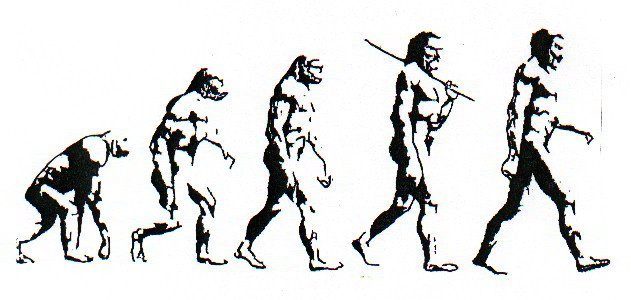
If all time were a day, a couple seconds ago, we were just a collection of dumb apes rutting in the mud and chasing bears with sticks.

Arguably, little has changed. But at least we can now check Facebook as we rut.

If you are wearing something made of gold, it would’ve once been just hydrogen.

Then, as a star dies, it creates heavier and heavier materials until it gets to iron. In the ensuing explosion, in a brief fraction of a second, there’s a moment in which all other elements are created.

The debris is blown across the galaxy, until it found a home here on Earth, where someone found it, called it gold, melted it down, reformed it, and sold it to someone who sold it to someone else who sold it someone else who handed it to you.

You are wearing a star’s dying breath.

Whole galaxies change. Survive the next three and a half billion years, and you’d be treated to the cosmic spectacular of the Andromeda galaxy crashing into this one. Two massive clouds, made up of billions of stars and untold more planets, swirling around two supermassive black holes on a collision course that’d make a supernova look like a firecracker.

If there is a God, he sure does love a good firework show.

Of course, given the nature of anxiety, if you suggest the idea of exploding galaxies to it, you will be spending the next 48 hours on the phone with SpaceX begging them to strap you to the side of their next rocket out of here.

Anxiety does not do well with the idea of change at all. But in truth, anxiety’s nervousness about change is an elegant bluff it wants you to call. While it’ll go to work running you down the moment you commit to doing anything, change is what it most desires.

Understanding this is key to understanding anxiety. Stress – from whatever situation – is a catalyst for anxiety, and long-term stress normally stems from inflexibility in your life. It is the discord that comes from maintaining the status quo when your whole being wants change.

Imagine the true nature of the static existence we strive to create. Its purest form, the utopia of the ideal we seek, is heaven. Endless pleasure. Always being surrounded by loved ones. Forever. And ever. And ever. And ever. And ever. Amen.

Yet this is no heaven. It is eternal stagnation. An endless stasis. For without change, how do you even define yourself? You exist to exist, and nothing more. Is that not purgatory? Is that not hell?

Myself, I’m a pantheist. I believe that the only thing that could truly be described as Godlike in all of existence is the universe itself. It is God, or at least meets all the criteria to be a god, without our species-specific bullshit thrown on it. The terms “universe” and “God” are entirely interchangeable, with three notable distinctions.

  1. The universe doesn’t have opposable thumbs, and is therefore incapable of writing any books.
  2. The universe is too busy smashing galaxies together to care about what hat you wear, your attempts to control others, or where you stick your genitals.
  3. The universe is always changing, all the time, and therefore is unlikely to sport the same beard and toga outfit for several millennia.

In this view of the universe, you accept change. You accept that change will be foisted on you, and you accept that there are changes you can make. Everything is temporary.

The Earth will likely be destroyed well before galaxies collide. Instead, it’ll be our Sun doing the last big singsong in Starland City. This change will be forced upon us. Whether humanity is there to see it happen are entirely down to changes we can make ourselves.

The same is true of every single human being walking the planet. Lives are finite, but how we live choose to live to us. Do we cower away in the moment and allow fear and insecurity to take it from us, or do we own the moment for ourselves? In embracing change and daring to alter that which makes you anxious, you are working with it to overcome it, rather than running from it. You are breaking its loop. You are setting it at ease. You are proving to it, and yourself, that fear does not own you.

Anxiety itself is not immune to change. It is the result of numerous small yet impactful changes over the years, slowly escalating towards an inflection point where it can no longer be ignored. But you arrive at that point because of change. Therefore, it’s purely logical that, with one small change at a time, you can start swinging it back towards the positive.

Anxiety is the result of change. It is the fear of further change. And yet, it is only change that can overcome it.

A year ago, I was fully in the grips of this ruinous condition. A year before that, I felt on top of the world. A year before that, I was falling in love. A year before that, I was burying a long-term depression. A year before that, I was far too drunk to accurately recall what happened.

Now, I’m back in my hometown and I’m improving rapidly – day-by-day. I came back to a place where I can draw strength from, and I’m funnelling that into changing aspects of my life that cause me stress – my work, my health, my drinking, and much more.

Anxiety can be undone. A person can transform. One small mental knot at a time.

Change is the one constant you can rely on.

And right here, right now, in the moment, the same is true. In fact, a moment is all we ever have. You don’t exist anywhere else. In this moment, I’m writing. The only evidence I have of past immediate moments are the words you just read, in a moment which has already passed for you. Ahead of us: possibility.

What will you do when you finish reading this? Will it be something you enjoy? Will it be something you emotionally benefit from? Will it be something you’ve been putting off? Or just do nothing? Either way, when the moment comes for you to decide, the choice is yours.

And that’s the point. Even in the midst of a panic attack, or when you feel all is lost, or when depression has got you down to the point where you see no way out – know that there’s going to be another moment.

It will pass, because everything does. You will have the opportunity to change things, because you always will.

Until you don’t.

Everything is temporary.


Thanks for reading. If you took something from this piece, please like and share it.