![plane]](https://uprootinganxiety.com/wp-content/uploads/2016/05/plane.jpg?w=656)
Here’s a point of view you won’t hear often: I am grateful for anxiety. Extremely grateful. Despite the misery it has inflicted on me, anxiety has given me – or rather forced upon me – the opportunity to actually get to know myself.
It’s been hell, but it has been entirely necessary. And, as I begin to pick up the pieces and slot myself back together, it feels solid. It doesn’t feel like some bandage I’m using to plaster over tectonic fault lines – the person that’s emerging from this feels like one built on strong foundations.
But before I really get into my own experience with anxiety – which I’ll be doing from next week – I thought it would be prudent to give an overview of what anxiety actually is.
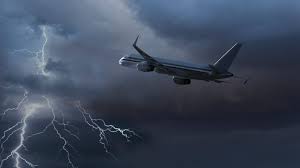
You are flying. You’ve been flying for some time, and recently, all you’ve been flying through is storms. The plane is damaged, and the passengers terrified. All the warning lights have come on, and you have to land.
Those warning lights are anxiety. You can’t take your eye off them, and they won’t go away until you land. If you choose not to, you’ll crash and burn. If you do, your plane will be repaired, refilled, and you can get on your way.
This is why anxiety is a cloud with silver lining. The coming crash landing will terrify you to your core, and you’ll feel like a failure no matter what when you hit the tarmac.
But it’s just a moment.
There will be another, and one of them will be when you are back in the air, happily coasting along in autopilot without a care in the world.
Everything is temporary.
This is how I understand anxiety. But how it feels is an entirely different story altogether.
It’s late at night and you are by yourself in some quiet train station in the middle of nowhere. You’ve had a great night, but you are cold, tired, quite drunk, and just want your bed.
Waiting for the last ride out of there, you look down the platform for an update, but instead you see two figures advancing on you. With the hoods up, you can’t see any of their faces apart from their eyes.
Both sets are locked on you with intent.
One reaches into their pocket for something.
Moving faster now and mere metres away, your brain sees the threat and goes to react.
One of three things will now happen, entirely dependent on how you are hardwired. You’ll either leg it – the flight response – launch into the pair – the fight response – or stand there and let it happen to you – the freeze response.
The three Fs have ensured the survival of countless humans over the years, including undoubtedly yourself at some point. When you encounter an immediate threat, this ancient part of your brain reacts instantly. In most cases, you’ll have already begun to respond before the rest of your brain has even caught up. Your heart rate jumps, your blood fills with adrenaline and cortisol, your muscles tighten, and peripheral thought and vision drops to focus on the threat. Your body prepares itself to fight for its life.
But what if there are no muggers? What if there are no perceivable threats at all, yet your blood burns with battery acid anyway? What if this happened to you all the time and there’s no way to stop it?
People misunderstand anxiety. People hear the name, and recall sometime in the past where they have felt mild fear – going on a date, public speaking, a job interview – remember how they got through it, and dismiss it as cowardice. But that’s rational fear. It’s rational thinking. Anxiety is anything but.
Imagine a weasel, or a ferret if you will. For whatever reason, this elongated rodent has replaced your hair, and sits in a ball on your head. You have no idea where this damn weasel came from, and what’s more, you can’t get rid of it. You went to the doctor about it, and all they can do is give you some drugs to calm it down every now and then. But it won’t stay calm. It claws at your eyes. Its feet dig into your brain. It gouges chunk of your ears out, and wraps its body around your throat like a boa constrictor. And it flips out all the time. The weasel is a schizophrenic, it’s on a permanent acid trip, it’s not having a good time, and it wants you to know about it.
That ferret is your fear. You can’t reason with it. You can’t rationalise. It is rampant, uncontrolled, and in a constant panic. You try, of course. You tell yourself that you are safe. You attempt to force peace on a stormy ocean. You commit your whole self to bringing harmony to your terror-struck mind. But nothing ever works. Nothing soothes the fear. You are eclipsed in horror that doesn’t just strike at the drop of a hat, it strikes at the very thought of a hat dropping.
What’s also frequently shoved under the carpet is the physical side effects of anxiety. From when you wake up to the moment you go to bed, your body is always on edge, your mind always looking for danger in everything. Even sleep is no respite – your dreams are enough for the battle drugs to kick in, waking you up in the middle of the night as what seems like shocks of electricity force you into a fearful conscious state.
Your muscles are always tight. You sweat intensely for no reason. Your mind is wracked with tension headaches. You can develop tinnitus – the constant ringing in your ears that never goes away. You feel every heart beat and panic over the slightest increase. Your gut goes to literal shit, along with an on/off appetite. Sex is off the table. Your face aches because you are always clenching your jaw. People throw themselves into drugs, legal, prescribed, and from the street, and can add the side effects of those to the list.
And, of course, there’s the panic attack. I’ve got a whole piece to share with you on attacks soon. But for the meantime, it’s handy to know that these gruesome bastards can come from nowhere, over seemingly nothing, and can go from mild discomfort all the way up to Defcon Clusterfuck.
For some people, they’ve been dominated by this all their lives. For others, it can start innocuously enough. You’ve been stressed at work. You’ve haven’t seen your friends lately, and that chest ache has been there for what seems like years. You begin to dwell on it. You dwell too much. Before long, it’s all you can think about. Without even realising it, you’ve been walking the fear path in your brain so much that what was once a dusty path is now a motorway, injecting every thought and emotion straight to the jittery, burnt out hub that is Fear City.
Work is now a continual failure that will only end with you dumped in the gutter, alone. Your friends never reply to your texts as they despise you and only want to see your hideous face one last time when they do everyone a favour and finally get around to burning you at the stake. Not that this is your biggest concern, because your heart is definitely going to give out before they can be arsed to put you out of your misery.
You trust no one. You feel no love, no peace. The turbulent tide of terror erodes your confidence, your belief in yourself, and makes you question everything. The concept that was previously you dissolves in a tsunami of panic, destroying all that you were and blocking you from all you want to do.
Fear is now your whole life.
The warning lights are on. But they won’t be forever. Everything is temporary.
And therein lies the positive, the silver lining, the light at the end of the tunnel. If you feel the way I do, rest easy because you already have the cure.
Just go to a mirror and you’ll be looking at it.
More on that soon. But next week, self-indulgence abound as I tell my own story of anxiety. If you enjoyed this blog or find it useful, be sure to check in then, and please feel free to give it a share.
 Uprooting Anxiety