The lonely battle with social anxiety

In psychology, there’s a thing called confirmation bias, and it’s something we’re all guilty of doing. The idea goes that once you believe something, you’ll seek out and accept evidence that reinforces that belief, and vehemently reject evidence that challenges it, no matter how solid.

Typically, you’d apply this to stuff like climate change, or religion, or politics. And while both you and I undoubtedly do exactly this, there’s one idea that I’ve applied it to all my life. A concept that I’ve constantly looked to reinforce. One thought that has been in my head all my life, and that I’m only just now beginning to understand is the starting gun for everything I’ve spent the past three months writing about.

It laid the groundwork. It introduced the patterns of fear now firmly resident in my head. It dug out the grooves for the river of shit to flow through.

That thought is this: I mean nothing to anyone.

For years, I’ve been convinced of this. More than convinced – I feel it all the way to my core. It is the concept upon which all my human interactions take place, it is the one constant I’ve had in my head for as long as I can remember.

After arriving back in my hometown in a bid to deal with anxiety, I was talking with a friend. She asked how I was settling in, and I said it was going okay, but I hadn’t really heard from anyone. Then she said “oh, that’s because everyone’s forgotten that you came back.”

“Of course they fucking have,” I said to myself. “Because my existence is fucking meaningless to fucking everyone.”

In the good old days, I’d have allowed this to just rattle in my head for days, weeks, or even months without any sort of check. I accepted it as normal and how I should be thinking about myself. Now, at the very least, I have a name for it: social anxiety.

The stereotypical sufferer of social anxiety is someone who shies away from social contact, who becomes deeply uncomfortable in social situations, and who can agonise over the slightest interaction for an eternity.

I originally felt this wasn’t me. I often find myself dwelling on social interactions and generally struggle and overanalyse in group settings. Yet, on the surface, I’m a sociable, outgoing person who speaks his mind. I do public speaking, generally up for making a fool of myself, and embarrassment less of a concern, more a good old friend. I don’t fear others, I’ve never been afraid to be myself, and I – for the most part – don’t duck out of social situations.

Of course you don’t have social anxiety, I told myself. It’s just that everyone just hates you.

Oh.

Wait.

Shit.

For years, I have projected the idea that I don’t give a fuck about other people and their tedious opinions of me. That I’m strong enough to do everything by myself. That I don’t need anyone in my life.

But it’s a lie. A damned lie. A damned lie I sold to everyone so I could convince the biggest sucker of all: myself.

The truth is that I perceive my life as worthless in the eyes of others. I’ve done it my whole damn life. I still believe it to be true. I believe it so completely that I don’t even get typical anxiety about it – it’s a certainty I can do nothing about. There’s no fear, no attacks – just a weary ingrained acceptance that I am universally despised.

This is where confirmation bias comes in. I struggle to recall good memories with friends, but vividly recall every time I’ve been let down. I assume that whenever people speak of me, they speak negatively, if they even think to discuss me at all. I forget compliments in an instant, but can remember insults and putdowns from decades ago.

I am convinced I am nothing. By searching tirelessly to find evidence to reinforce that narrative and rejecting anything to the contrary, I have persuaded myself that there’s nothing that can be done about it. Worst of all, I have allowed a pervasive sense of self-hatred to fester deep within me – one that fuels depression, self-loathing, and a pattern of self-destruction that’d make Hunter S. Thompson wince.

This has been a problem from the moment I was born. I was raised as a Catholic, and thus have been told from birth that there was something wrong with me. I’ve had the concept that I’m a sinner, that I’m evil, that I’m worth nothing hammered into me from my first breath.

Things didn’t improve as I aged.

Children are evil little shitbags. Barely more sentient than monkeys and far less socially sensitive, these disease incubating spreaders of hatred make Hitler look like the goddamn posterboy for inclusiveness. And much like the Nazis, children hate differences in people – they will burn at the stake anyone with even the slightest deviance from what is considered normal.

Being tall, smart, and generally capable of independent thought, I was doomed from the start. It didn’t help being raised as a Catholic either – people spurned me, and my faith told me I was at fault. For added salt, my mother delighted in embarrassing me all the way through school, providing my school chums with bucket loads of ammunition.

Despite that, I did represent a challenge. You couldn’t easily beat me up, and you couldn’t outsmart me. So instead, people just insulted and isolated me.

I’ve always hated football, but through fear of yet further social exclusion, I was forced to play at school. Being tall and surprisingly flexible for someone of my height, I became quite good at the ol’ goalkeeper game. I’ll admit – I even enjoyed it. None of this mattered though – no matter how hard I tried, I was still shit in the eyes of my peers.

There was this one game where we won 5-0. While I can’t speak for the five goals scored by my team, I was instrumental in ensuring we didn’t concede a single one.

At the end of the game, our PE teacher gathered everyone round. In a bid to boost my confidence, he asked everyone who they thought was the better goalie, a well-liked chap called Ben who let five goals in, or myself with my flawless performance.

Everyone said Ben.

This was essentially the story of my formative years. All the way through school, I felt alone and like an outsider, and seemingly every opportunity to remind me of this was expertly seized upon. Family, friends, faith – there was little in life growing up that didn’t rape me of my self-esteem.

The deepest wounds came when friends at my middle school pitched in. Amongst other fun and games, they’d purposely go out of their way to invite me places just to run away. Sometimes I’d give chase, sometimes I’d just break down and cry. It wasn’t until late in my school life that I began to make friends that didn’t seem hell bent on trying to fuck me over.

This has stayed with me. Twenty years later, I still expect people to abandon me. If people are late to meet me, I’ll assume they aren’t coming. If someone doesn’t text me back, I take it like a goddamn dagger to the heart. Even something as simple as someone needing to pop to the shop quickly while we’re in the pub, I’ll think they are using it as an excuse to leg it.

I expect people to fuck me over. I expect no one to be there when I need them. I expect nothing from people because that’s what I expect them to think of me.

Social anxiety, without me even realising, has shaped so much of my personality.

I consider myself a non-conformist. I dismiss commonly held beliefs simply because most people believe them. I avoid groups and clubs because I feel that I’m not wanted anywhere. I feel no solace in being a part of something. I don’t subscribe to groupthink, or feel the pull of group mentality. I feel alone in a crowd. Hell, I feel alone no matter where I am.

More than that, I feel I should be alone. That it is my destiny. That I should just accept it and stop interfering with everyone else’s life.

Of course, the fun doesn’t just stop at friends and acquaintances. Unsurprisingly, thinking everyone hates you has made relationships somewhat tricky.

Shortly after one relationship had crashed and burned, I took my Nan out for lunch. As I was bringing her up to speed, she noted that I was talking about an entirely different woman from the last time I had seen her. She offhandedly remarked that I was the sort of person who’d always be alone.

She meant to jab at my chronic womanising. What she hit instead was the anxiety. My dear old sweet Nan, mercilessly throwing me to the wolves of my deepest insecurities.

The first step – actually talking to someone you’re attracted to – is something I’m sure we’re all familiar with. It doesn’t help when your so-called confidence is a raging misanthropic pessimist that’s chucking empty bottles of whiskey at you and calling you a universally despised cunt before you’ve even made eye contact.

Worse is admitting feelings. The amount of women I’ve been absolutely crazy about but unable to own up to my feelings is staggering. My self-worth is a giant water balloon – seemingly impressive but explodes under the slightest pressure (and yes – you can steal that analogy for your premature ejaculation blog). If a woman who I’m mad about elects to spend some time with me, I’ll just assume that the universe is just having a bad day and it’s probably worth just keeping my mouth shut until the shitstorm continues.

On occasion, there’s been women who not only lead me to water, but have the patience to repeatedly slam my slack-jawed face into it until I realise what’s going on. My last girlfriend once told me I didn’t know how to be loved, and she was right. I’ve loved many women, yet when it comes to thinking that any of that was reciprocated, I believe one or two of them. Even then, I constantly wrestle with it, and ultimately lose the fight.

Someone loving me does not fit into the narrative of self-hatred I spin for myself. When you adamantly believe that everyone hates you and the world wants you to be alone, love is the second hardest concept in the world to accept.

The hardest? That I’m wrong.

That I’ve been wrong all along. That I’ve let a small handful of bad experiences shape my connections with others for 31 years. That I’ve let the Catholic bullshit win, and that my whip of self-flagellation is my self-hatred. That my self-hatred isn’t even me, but is the manifestation of all the negativity utter bastards have shown me. That I don’t have to listen to that voice anymore. That by exposing it, by understanding it, and by shoving it out in front of all of you that it will wither and die. That I don’t have to live like this, that I don’t have to think like this, that I can change how I treat myself.

That I actually have value. That people actually do care. That my mind is worth saving from the ravages of this terrible affliction after all.

This has been the hardest post so far for me to write – hence why it took an extra week to get out. The idea behind all this has been knocking around for a year, but this is the first time I’ve truly admitted this feeling to anyone and how badly it has sucked me in, including myself. I feel raw. I feel like a fool. I feel like I need to apologise to everyone I know, especially myself. I feel like I’ll need some time to really explore the whole concept, how it has affected me, and how to overcome it.

I haven’t got any real idea how people actually feel about me – does anyone? But what I do know is that I have friends. I have a life. I don’t need to be dominated by my past. I can find a new understanding of myself and my place in the world, and find positive evidence to back it up.

At the very least, I don’t have to hate myself.

—-

I started CBT a couple of weeks ago, and one of the things that came out of it is that I might not be as over depression as I’d been leading myself to believe. This latest post confirms it – I can see how both anxiety and depression have been a tag team here. So, next week, I’ll take a break from anxiety to discuss its mopey cousin.

As always, if you’ve taken anything from this blog, please like, share, and comment. Not only does it help keep me writing, but exposes my work to others suffering through the same stuff I’ve been through.


Working towards mental collapse

There’s a modern day plague affecting the western world. It is isn’t ebola, or zika, or any number of disease-shaped boogiemen.

That plague is stress.

For me, there is no greater source of stress than my relationship with work, which has been the primary catalyst for all the anxiety I have experienced.

Work anxiety has so many avenues of attack; numerous meteorites striking to the core of a person. Becoming destitute. Your social standing. The time it robs you of. The pressure to deliver. Your future success. Dissatisfaction with what you do for work. Inadequacy. The constant competitive nature. Procrastination driving deep panic. Working too hard breaking you as a person.

Up until January this year, I’d been working at a media startup covering university innovation. While niche, I can’t help but love the sector. Robotics and prosthetics. Cancer cures and anti-ageing pills. Games companies and artificial intelligence. All the ground-breaking initiatives to get innovation out into the world and the pots of cash appearing to stimulate it.

The topic was perfect for me, and the way I covered it didn’t hurt either.

I worked from home, chose my own hours, worked at my own pace, had responsibilities and a very direct impact on the direction of the company, and got paid to travel all over the world.

But what goes unspoken about in the startup world is the excruciating toll the entrepreneurial lifestyle takes on you. There’s constant uncertainty about your work and its value to the outside world. You never know how long the company is going to ride any current waves of success. You fret over whether you are even going to get paid next month.

My old boss used to get up at 3 in the morning and work through to the late evenings seven days a week – I’m not sure he has a life away from his laptop.

This is the level of dedication which is expected of you.

I’d get up early, and work late. I’d throw my whole being into my work. Whenever I was supposed to be relaxing, I’d still be working in my head. I’d check emails at all hours. I’d take on new projects, more responsibility, and more work. In startup life, each team member has to be a star player, and I’d be damned if I was going to be the weak link.

At the time, I had no idea of anxiety. I didn’t know what stress could do to a person. I’m a big, powerful man who’d stumbled through life without a plan yet always landed on my feet – I figured I was the sort of person who could just carry it.

I was dead wrong.

The pressure began to find those cracks. Increasingly, I questioned myself, my talent, and my ability to withstand it all. I began to believe that I was an imposter who’d stumbled into this and that I would be found out. Instead of blowing off steam, I’d just take the stress and throw it back at my work.

As time went by, bad habits began to emerge and became entrenched. Top of this list was procrastination, which – of course – made things worse. The to-do list grew, and the time I had to do it in withered. In response, I became a master at the last minute delivery. These days, I hear people panicking over a 1,000 word essay with a month to write it, and laugh – I can knock out a 3,000 word feature in an afternoon.

When you take this approach, you spend 95% of the time you should be working stressing about doing work, and when you finally get down to write the damn thing, you’re undoubtedly cranked on coffee drenched in panic sweats. Ultimately, what you deliver may be on spec, but it’s never the sort of quality you wanted it to be. The whole process leaves you frazzled, and the end result is underwhelming and disappointing, giving you even more to work yourself up about.

I was always living under the threat of deadlines and living reactively, rushing from one disaster narrowly avoided to another fire to put out.

As fear about work increased, anxiety began to seep into the rest of life. It assaulted first my health before moving onto social anxiety, sex and my relationship, and fostering a deep, entrenched sense of dread about life in general.

It became unbearable. I had no idea on how to cope, no idea how to managed any of the stress, and felt like no one would understand. Worse, I felt that if I opened my mouth – if I even admitted to myself for just a second just how awful I felt – that I would be exposed and the whole thing would come crashing down.

Yet, I soldiered on. What ultimately broke me was a year-long battle to keep myself out of the redundancy firing line.

We took on seed investment in 2014, and the money was badly spent. We made a number of bad hires. We launched a title for which there was no interest in. When we got the website for the third title made, we went to the people who provided us server space, IT support, and designed our previous website – a bunch of clueless shinpads who only exist because they’d managed to sucker computer illiterates such as my old boss to come languish in them in development hell. We bled ourselves dry.

By the time 2015 rolled into view, the investors were cracking out the redundancy hammer. I was told at the start of the year that my job was at threat. The investors wanted to ditch our university coverage and focus on our corporate title, which I didn’t work too much on. I was going to be gone by February.

A catalyst for the underlying anxiety, redundancy brought to the forefront all the fears and anxieties that had been building up. I’d be seen as a failure. I’d run out of money and become destitute. My girlfriend – who I’d been financially supporting the whole time – would get sucked into the whole clusterfuck. I would have nowhere to go. No one would want to take me on. Everyone would know that I was just another imposter who got outed and got his comeuppance.

In short, I would be fucked.

But worse than anything was the thought that everything I’d spent all that time doing would be for nothing. I cared more about my stupid articles more than my own wellbeing.

At the very last minute, they decided to ditch our incompetent business manager instead. I had a reprieve, but at great cost to my mental health.

The month after saw me instantly getting to work on a major special report for the company, with a big trip to the US breaking it up. Upon returning to the UK, I was jetlagged and exhausted, but still had to pull four 15 hour days to get a special report finished on time. I filed the report, had a smoke, and instantly went into full mental collapse.

I should have taken a decent amount of time off. I should have instantly committed myself to getting better. I should have just put my hand up, admitted I was beaten, and walked away.

I didn’t.

Two weeks later, and I was back at work. Two weeks after that, and I was back in the redundancy process.

I wanted to just let it wash over me and carry me out to sea where I could finally die in peace.

Instead, I managed to cobble together a deal to stay on. It was reckless, foolish, and I should have just given up. But I couldn’t quit – I still felt obligated to stay with the team, I needed the cash to support myself and my relationship, I wasn’t ready to admit that I was beaten.

I needed it to mean something.

I didn’t want to be a failure.

I got a couple of words on my title, now Editor-at-Large, and a ton of new responsibilities to satisfy the vampire squid mother fuckers who lent us the cash and wanted my arse in return.

I was already a man dragging his dehydrated, broken frame through a desert. The deal was basically the investors coming over, breaking both my legs, chucking a bucket of water in my face, and cheerily saying “good luck!” before fucking off into the sunset.

In the months that followed, my relationship fell apart and I was left alone with an ever increasing mountain of stress and anxiety.

There was always more work.

One particular project was chronically mismanaged by my boss, and I became the kicking boy for his rage – fuelled, I suspect, by his own stress and anxiety.

I became deeply depressed, and gave up. I started smoking weed and drinking in working hours, and the only reason I filed a report at all was entirely down to cocaine.

It would ultimately be for nothing.

When redundancy came knocking a third time, I didn’t fight it.

I went into what I could only explain as withdrawal – my supply of work had been yanked from underneath me and I was clucking hard. It took me a good couple of weeks to even realise what had happened to me – I was still expecting there to be work to do despite full well knowing that there was none.

It was only when I was forced to stop that I finally realised the damage working like this had done to me.

Months later, and I’m still not recovered.

I’m working part time as a freelance journalist and consultant, doing what I need to get by. I’m currently working out a commission, and I’m getting it done, but it’s a constant struggle.

I remain terrified that accepting work is going to lead to failure. Each time I sit down to work, I become deeply uncomfortable, I’m unfocused, all those fears and insecurities knock around in my head, and I’m immobilised.

It is only through survival instincts that I put pen to paper.

As with the rest of my life, my confidence has been ravaged by anxiety. Those bad habits are still hard-wired.

But through taking anxiety by the balls, it’s beginning to come back. I’ve had to completely re-evaluate my relationship with work but I’m getting there.

I’ll be talking more about burnouts, our relationship with work as a society, and coping strategies I’ve used as this blog develops. But, for now, if any of this sounds like you, it’s critical to realise how stress can manifest as anxiety, and anxiety can lead to burnouts. It’s crucial that you take the time out from work, that you aren’t working all the time, and you make work a part of your life that you own, not a part of your life that owns you.

Also, know that jobs come and go. Opportunities are there for those who want them. If work becomes too much, you can always walk away and find something that works for you.

Everything is temporary.


Thanks for reading. As this is a new blog, I deeply appreciate every like, share, and comment I receive. As well as keeping me writing, it also helps the blog reach others suffering from anxiety, and lets them know that they aren’t alone. Please support this blog by helping me reach those people!

This is the first of a series of pieces all about work anxiety, with others planned in the coming weeks. But in the meantime, if you have a story about how you have dealt with pressure and stress at work, please feel free to talk about it in the comments below.

Health, Hypochondria, and Parmos

There’s this thing called the parmesan in Newcastle. Affectionately known as the parmo, it’s essentially a pizza – a flat circular object with all manner of cheese and other bits dumped on top.  But instead of dough, it has fried chicken as a base.

I bring this up to underline that when it comes to fast food, Geordies are the real deal.

Americans get laughed out of town with their pitifully sized portions. The ultimate insult to a Geordie is to say “Yo Mama so fat, they could serve her as a takeaway”. If Jesus was from Newcastle and shit out of magic powers, he could still feed the forty thousand with a couple of kebabs and half of last night’s curry.

You put on pounds just being in proximity to these things, and I was in close proximity a lot.

One of the consequences of this was sleep apnoea. Essentially, when you drift off to sleep, all the muscles relax at the back of your throat. If you are both overweight and have an underbite, there’s a chance they relax so much that it causes horrific snoring at best, blocks off your breathing at worst.

Once when I was asleep after drinking too much – another cause of apnoea – I felt a thud in the dream I was in, followed by another, louder thud, then another. It felt like a radar pulse, and each time it pinged, it pinged with greater urgency, shattering the dream world.

I awoke in the darkness drawing a sharp intake of breath, my head pounding, with the pulse quickly fading.

All I could think was that the pulse was urgently trying to wake me up as I was seconds from suffocating in my sleep. Is this the last sensation of someone who’s choking to death? Who’s drowning?

I didn’t go back to sleep that night.

Each time thoughts of my health and the apnoea entered my head, they shot off into realms of pure dread, bolstered by fear of all the long term effects – strokes, heart disease, all the usual good stuff. The foundations of terror had been laid. I’d panic about the apnoea which would make me panic about my weight and drinking which would drive me to eat and drink more which fed the apnoea – all of which circled around the subject of my imminent demise. The mad death loop was never far from my thoughts.

Despite the regular trips to the doctors and hospital, it turned out that sleep apnoea is relatively easy to treat: lose some weight, and sleep on your side. But the damage was already done. Already under great stress from other sources, anxiety had found an outlet for the pressure and it was squarely aimed at my health. It had carved a deep groove of panic in my brain, and I felt immobilised. I struggled and failed to get a handle on my destructive habits, which only ever seemed to increase.

Liam Gallagher says you aren’t a real rockstar until you’ve got tinnitus. If that’s the case, then let me tell you that life as a real rockstar sucks. I developed it about a year and a half ago and it would go on to have a profoundly destructive impact on my mental health. Having a constant buzzing in your ear with no certifiable cause does no favours for your anxiety. Your brain scrambles to find a reason behind the noise you can’t escape, and when you can’t find one, anxiety fills in the blanks.

Tinnitus is music to go mad to; it is an endless circle of audio dickery.

With it, my health anxiety became full blown hypochondria. Everything was out to get me. Every ache, every pain, every twinge was a symptom of something bigger. The Reaper is everywhere.

Living in that state is a perpetual hell. We all know that we are going to die – it’s a fact of life. But constantly having the thought of death front and centre in your mind, pushing everything else to the side, can destroy a person.

What’s worse is that anxiety loves an opportunity. Got some wood, it’s got a match. Got a fire, it’s got a can of petrol. Got half the town alight, it’s got your self-belief and confidence sandwiched by marshmallows on a stick, ready for a roasting.

Fear of dying but no actual aliments? No problem! Headaches, problems with your vision, tinnitus, muscle tightness and spasms, clenched jaw, loose bowels, any sort of pain, sexual redundancy, heart going crazy, itches and rashes, sore throats – you name it, anxiety can make it happen. There’s few things that a constant supply of adrenaline and cortisol can’t accomplish.

It’s a cat chasing its tail. Anxiety creates it, but conveniently forgets about it. When you notice it yourself, you might be like “it’s just a headache, nothing to concern myself with”, but anxiety has already packed your bags, is behind the wheel, and is screaming down the motorway towards the nearest nuclear shelter.

By giving into the fear, you give it power. You dwell on the possibilities, and become immobilised. And if you are perpetually living in the future where your brain is exploding or you are having your limbs hacked off because of diabetes or feeling cancer drain the life from your body, you aren’t living in the here and now where you can actually do something about it.

Anxiety is kind of like a bundle of wires that have got tangled up. If you follow one wire, you’ll see it interwoven with many others. If you pull on just that one wire, all it will do is just get tight and not go anywhere. Sometimes, it’ll make the whole thing worse. Instead, the best strategy is to follow it to its end, see which wires it crosses with, and attempt to unwind them all.

I’ve found this is especially so for health anxiety. There’s all sorts of fears interwoven with it, and there’s poor coping mechanisms which only exacerbate the problem. For me, making progress has required a holistic approach.

There’s techniques that help anxiety as a whole. I spoke about taking a year off booze last week (now at seven weeks in!) and we’ll get onto other broader stuff in future posts. But there are a couple of things that have helped with hypochondria.

It’s always good to go and see a doctor – 99 times out 100, it’ll be anxiety, but if you don’t go, the thoughts will fester and gain strength.

On doctors, also try and keep in mind that they are probably better qualified to say what’s wrong with you than your anxiety. If you really feel strongly that they are wrong, you can always ask a second doctor. But even your anxiety is almost definitely more reliable than whatever you read on the internet.

The internet is catnip for anxiety. I managed to give myself my worst ever panic attack while reading about aneurysms while I had a headache. I should’ve taken some paracetamol. Instead, I took a cerebral asswhooping.

Even if you don’t get mentally curbstomped, it can place some pretty unhealthy thoughts in your mind. It’s like sexually propositioning the Hulk: there is no scenario in which this doesn’t end badly for you.

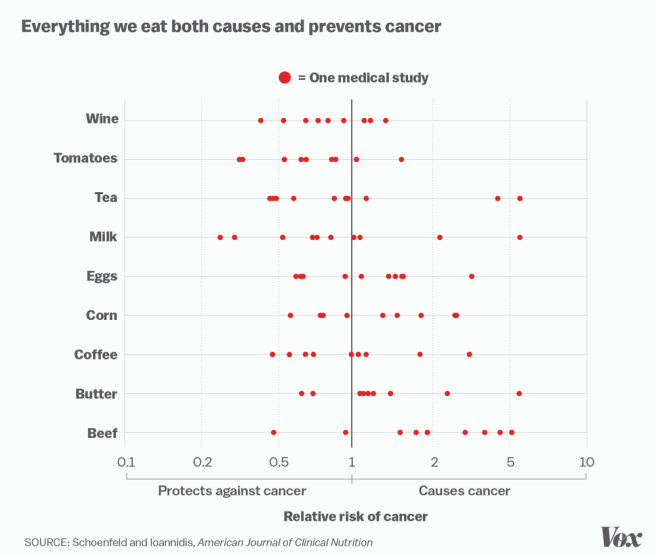
This goes double for journalists telling you how to stay healthy. I’m a journalist myself, and am fully aware of the irony of me warning you to beware strange hacks on the internet, but check your sources. There’s a lot of good stuff out there, but a large chunk of health pieces in papers are written entirely for the sensationalism and to flog copies. The research most hacks put in is minimal at best, and the studies they base their pieces are about as useful as a paper mache wetsuit.

Medical_studies-05.0
A chart which helpfully points out just how shit some studies are.

The main thing though is to not despair. Everything is always in motion, and as anxiety rises, so too can it fall. There have been times where I felt like I really was doomed to feel on the edge of death for the rest of my life. These days, I’m feeling good, and making steady progress. It’s all just small yet steady steps in the right direction.

Starting with saying no to parmos.

#NoToParmos


Thanks for reading. If you enjoyed this piece, please support this blog by liking and sharing.